
Allahabad High Court Flags Constitutional Concerns Over Detention
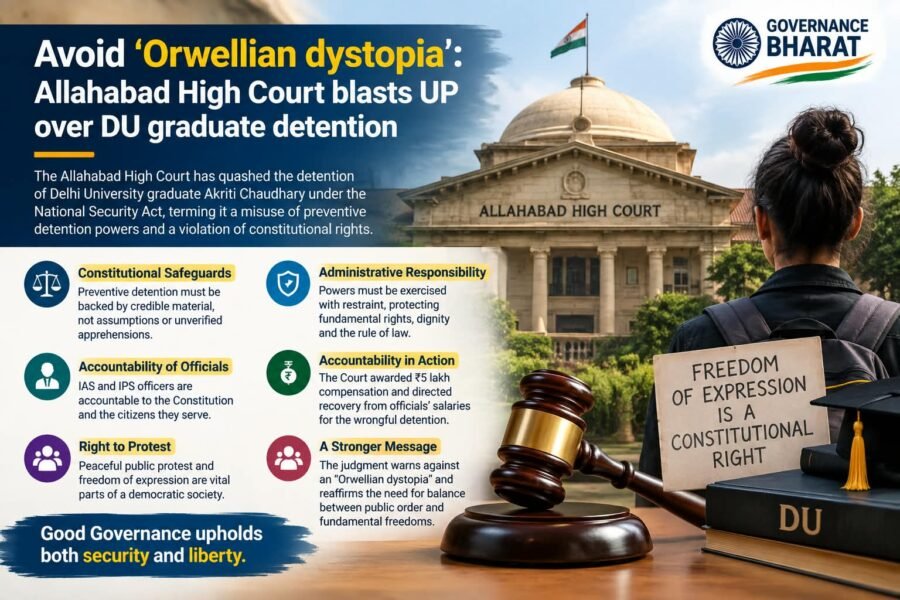
The Allahabad High Court has strongly criticised the use of preventive detention provisions against Delhi University graduate and student activist Akriti Chaudhary, underlining the importance of constitutional safeguards, due process and accountable governance. The Court quashed her detention under the National Security Act (NSA), observing that the material relied upon by authorities did not provide sufficient basis for such stringent action.
The Bench of Justice Atul Sreedharan and Justice Achal Sachdev raised concerns over the manner in which the Gautam Buddha Nagar District Magistrate exercised administrative authority. The Court emphasised that preventive detention cannot be sustained merely on allegations, assumptions or unverified apprehensions, and must be supported by credible material.
Highlighting the constitutional role of the bureaucracy, the Court stressed that IAS and IPS officers are accountable to the Constitution and the citizens they serve. It observed that administrative powers carry a corresponding responsibility to protect fundamental rights, dignity and the rule of law.
The judgment also reaffirmed that peaceful public protest and freedom of expression form an important part of democratic governance. The Court noted that citizens should be able to raise legitimate grievances peacefully, while authorities must maintain public order through lawful and proportionate measures.
As a measure of administrative accountability, the Court awarded ₹5 lakh compensation to Chaudhary and directed recovery from the salaries of officials found responsible for the detention order.
The Court’s warning against an “Orwellian dystopia” highlights the need for constitutional restraint, institutional accountability and citizen-centric administration. The ruling reinforces the principle that good governance requires a careful balance between public order and fundamental freedoms.