
China’s 400 km/h Bullet Train Nears Commercial Debut as New Numbering System Signals Next Speed Leap
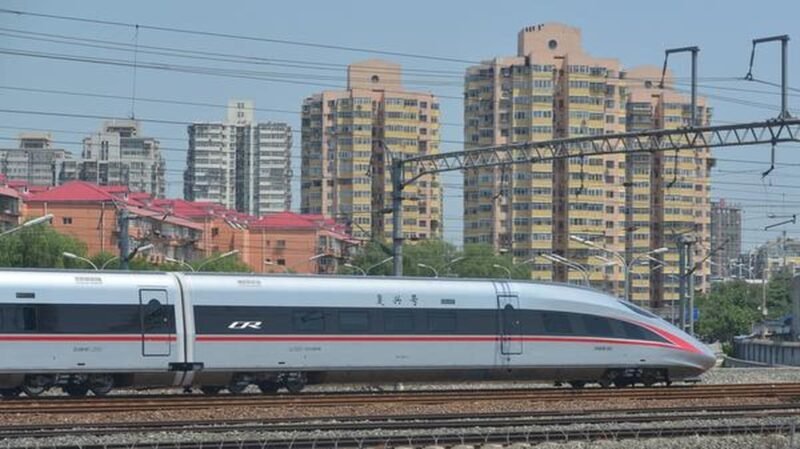
China is moving closer to introducing its next-generation high-speed train, the CR450, designed to operate at 400 km/h, as a major overhaul of the country’s railway numbering system signals preparations for a new category of faster passenger services. China State Railway Group announced on 16 October 2026 that the revised system will introduce the prefix “X” for Fuxing trains capable of operating above 350 km/h, creating a distinct category for future high-speed services.
A New Benchmark in High-Speed Rail
The CR450 represents China’s next step beyond its existing CR400 Fuxing trains which operate at commercial speeds of up to 350 km/h. The new model is designed for commercial operation at 400 km/h, potentially reducing journey times on busy intercity corridors and strengthening the competitiveness of rail against air travel.
The introduction of the “X” prefix is a significant administrative signal because it creates a formal identification category for trains operating above the current 350 km/h benchmark. However, the numbering change does not itself confirm a launch date or mean that passenger services have already begun.
Technology, Testing and Network Readiness
China’s railway authorities have been testing the CR450 to validate its performance, safety and operational reliability before commercial deployment. The train’s development forms part of a broader push to strengthen domestic railway technology and improve the efficiency of high-speed transport. China’s 2026–2030 railway science and technology plan also identifies the 400 km/h operating system as an area for demonstration projects and technological advancement.
The revised numbering framework will classify services according to their speed, operating characteristics and transport functions. This is intended to make train categories easier for passengers to identify while expanding the available numbering capacity for future services. The changes are scheduled to be implemented in two phases, beginning in November and continuing in December 2026.
Why It Matters
The development has implications beyond faster passenger journeys. Higher operating speeds can improve connectivity between major economic centres, support business travel and strengthen the role of railways in regional economic integration. However, the gains will depend on track infrastructure, signalling systems, power supply, maintenance standards and the completion of safety assessments. Higher speeds also require careful evaluation of energy consumption and operating costs.
For India, China’s progress offers a relevant infrastructure-policy lesson: next-generation railway development requires coordinated investment in rolling stock, dedicated infrastructure, signalling and operational safety rather than simply increasing train speeds.
The Governance Perspective: China’s proposed 400 km/h services illustrate how technological innovation and administrative reforms can advance together. The new numbering system signals preparation for a higher-speed railway category but the CR450’s commercial debut remains dependent on operational readiness and regulatory requirements.