
Japan Launches Historic Mars Moon Mission to Unlock Solar System’s Origins
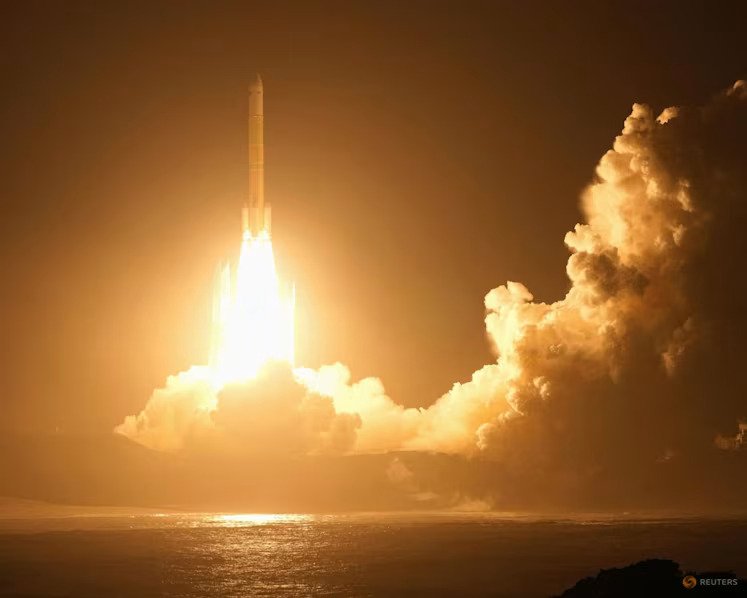
Japan has successfully launched its Martian Moons eXploration (MMX) spacecraft, marking a major milestone in planetary science and deep-space exploration. The mission aims to collect samples from Phobos, one of Mars’ two moons and return them to Earth for detailed scientific analysis by 2031.
The Japan Aerospace Exploration Agency (JAXA) launched the uncrewed spacecraft aboard its H3 rocket from the Tanegashima Space Center on October 20, 2026. The rocket placed the spacecraft into its planned trajectory approximately 71 minutes after liftoff, confirming the successful deployment of the mission.
The MMX spacecraft is expected to reach the Martian system around August 2027. It will study Phobos and attempt to collect at least 10 grams of surface material. The mission will also observe Deimos, Mars’ second moon, to improve scientific understanding of both celestial bodies.
If successful, MMX will achieve the first sample-return mission from a moon of Mars and mark a significant technological advance in interplanetary exploration. Scientists expect the samples to help determine whether Phobos formed from material associated with Mars following a major impact or originated as an asteroid captured by the planet’s gravity.
Governance and Strategic Impact
The mission strengthens Japan’s position in advanced space science, autonomous exploration and precision spacecraft engineering. It also demonstrates the growing importance of international collaboration with contributions from research institutions and space agencies across several countries.
Beyond planetary science, MMX will help develop technologies for navigating the Martian system, operating near small celestial bodies, collecting extraterrestrial material and safely returning it to Earth. These capabilities could support future robotic missions and more ambitious human exploration initiatives.
The mission’s planned return in 2031 will be a critical milestone. Its findings could deepen scientific understanding of Mars, the evolution of the early Solar System and the distribution of water-bearing and organic materials that may have contributed to the emergence of life on Earth.