Conversion Cannot Automatically Secure Reservation Benefits: Supreme Court Clarifies Legal Position
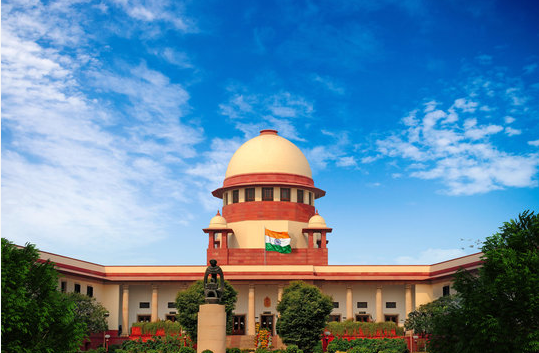
The Supreme Court of India has reaffirmed that religious conversion does not automatically entitle an individual to reservation benefits under a different notified Backward Class category. In a significant ruling on October 15, 2026, the Court upheld the Madras High Court’s decision striking down a Tamil Nadu government order that enabled certain converts from Hinduism to Islam to claim reservation under the Backward Class (Muslim) category.
A Bench of Justices Prashant Kumar Mishra and Shree Chandrashekhar held that social backwardness associated with a person’s earlier caste or community cannot, by itself, be transferred to a different notified backward-class community following religious conversion.
What the Supreme Court Ruled
The case concerned a man who converted from Hinduism to Islam and sought a community certificate identifying him as a member of the Muslim Lebbai community,
which is included in Tamil Nadu’s Backward Class list. The dispute followed the rejection of his application and a subsequent challenge to a 2024 state government order concerning reservation eligibility.
The Supreme Court declined to interfere with the High Court’s judgment, holding that conversion alone cannot establish membership in a separate notified backward class. Eligibility must rest on the applicable legal and social criteria rather than simply on the individual’s pre-conversion caste status.
The Court also reiterated that under the Constitution (Scheduled Castes) Order, 1950, Scheduled Caste status is restricted to persons professing Hinduism, Sikhism or Buddhism. A person converting to a religion outside these categories cannot retain Scheduled Caste status on the basis of their earlier caste identity.
Governance and policy implications
The ruling reinforces the distinction between the constitutional right to practise or change one’s religion and the statutory eligibility requirements governing affirmative action. Religious conversion is protected under Article 25, subject to constitutional limitations but reservation eligibility is governed by separate constitutional and legal provisions. The Court also clarified that reconversion does not automatically restore previous reservation eligibility; the competent authority must conduct an independent, fact-specific assessment.
From a governance perspective, the judgment has implications for community-certificate verification, reservation administration and the implementation of state-level welfare policies. It underscores the need for governments to ensure that reservation benefits are granted according to legally recognised community classifications and established eligibility criteria. It also highlights the limits of executive orders when they attempt to extend statutory benefits without an adequate legal foundation.
The decision is significant because it clarifies that reservation cannot be claimed solely by transferring a person’s previous caste identity into a different notified backward-class category after conversion. At the same time, the judgment does not mean that every religious minority is categorically ineligible for reservation; eligibility depends on the applicable constitutional framework and recognised community classifications.
For policymakers, the central governance challenge remains balancing the constitutional framework for affirmative action with transparent, consistent and legally sustainable implementation.