
Beyond Garments: India Bets on Textile Modernisation to Expand Global Market Share
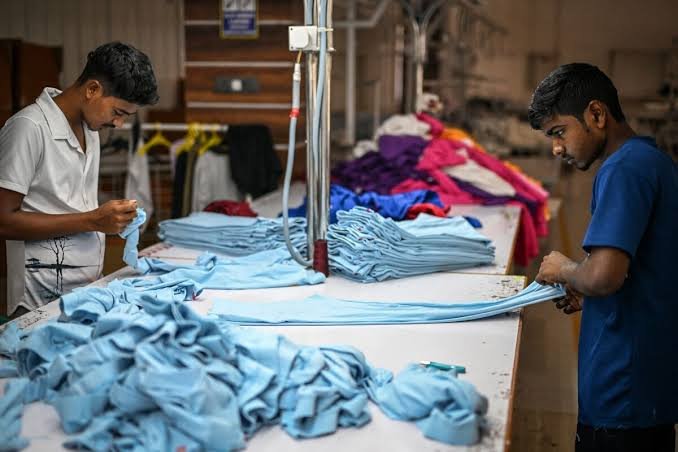
India’s textile industry is targeting a market size of $350 billion by 2030 supported by recovering exports, rising domestic demand, manufacturing investments and efforts to strengthen global competitiveness. According to a report by Rubix Data Sciences, cited by the India Brand Equity Foundation ,the industry reached approximately $190 billion in FY2025–26, underlining the scale of the opportunity ahead. However achieving the target will require sustained investment, cost control and improved access to international markets.
Export Rebound Signals Renewed Momentum
India’s textile and apparel exports, including handicrafts, increased by 10.3% year-on-year during April–August 2026, according to the Rubix report. This recovery follows a 2.7% decline in exports in dollar terms during FY2025–26 when shipments stood at approximately $35.8 billion. Readymade garments accounted for around 44% of exports while man-made fibre textiles contributed approximately 15%, highlighting the importance of both established garment manufacturing and diversified textile production.
Investment and Modernisation Drive
The government’s textile infrastructure and manufacturing initiatives are expected to support capacity expansion, technology adoption and employment generation. Investment proposals under the seven approved PM Mega Integrated Textile Region and Apparel Parks reached approximately ₹68,590 crore by August 2026. The government is also considering a five-year Textile Expansion and Employment (TEEM) Scheme with a proposed outlay of ₹40,000 crore to modernise machinery, introduce advanced technologies and upgrade traditional textile clusters.
Rising Costs Remain a Critical Challenge
Despite stronger export momentum, the industry faces pressure from higher raw-material costs and international trade uncertainty. Cotton yarn prices reportedly increased by around 60%, reaching ₹400 per kilogram in September 2026, compared with ₹250 per kilogram in early 2026. Manufacturers are also diversifying export destinations as shipments to the United States weakened while exports to major European markets increased.
Strategic Significance
The $350 billion ambition represents more than an expansion target; it reflects India’s opportunity to strengthen its position across the global textile value chain. Policy support, modern manufacturing facilities, competitive raw-material supply, skilled labour and wider export-market access will be essential to achieving sustainable growth. For India, the challenge is to convert the current export recovery into durable gains in productivity, investment and global market share.