
Supreme Court Sets Limits on Disciplinary Action, Orders Reinstatement of CRPF Constable Removed for 99-Day Leave Overstay
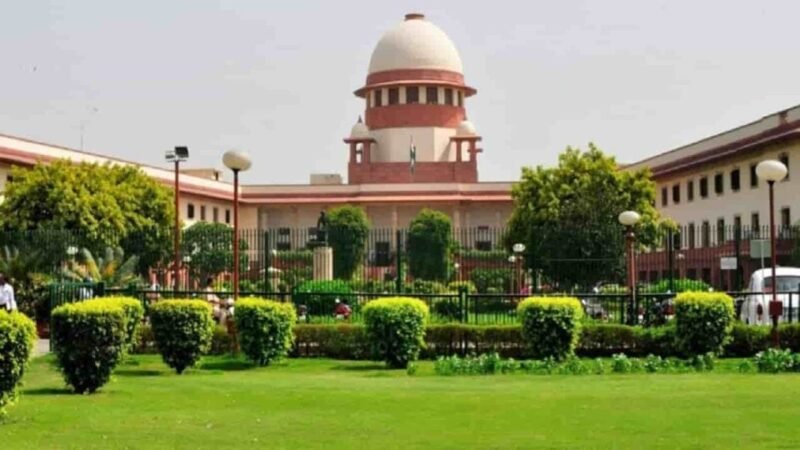
The Supreme Court has directed the reinstatement of a Central Reserve Police Force constable who was removed from service for overstaying his sanctioned leave by 99 days, ruling that unauthorised absence cannot automatically be treated as wilful misconduct. The judgment reinforces the principle that disciplinary action against government employees must be supported by evidence and proportionate to the nature of the misconduct.
In Mithilesh Kumar Pathak v. Union of India a Bench comprising Justice Satish Chandra Sharma and Justice Nongmeikapam Kotiswar Singh set aside the Patna High Court Division Bench’s decision and restored the earlier order of the Single Judge.
The constable had taken leave due to his wife’s illness but subsequently remained absent after suffering from infective hepatitis himself. He submitted medical prescriptions, pathological reports, medicine bills and a fitness certificate to justify his prolonged absence.
However, the departmental enquiry officer questioned the authenticity of these documents because they lacked certain hospital registration details and appeared to have been written using the same pen. The Supreme Court found that rejecting the medical evidence on such assumptions, without proper verification was based on conjecture rather than established facts.
Administrative Implications
The Court held that unauthorised absence and wilful absence are not necessarily synonymous. Authorities must examine the employee’s explanation, supporting evidence and surrounding circumstances before imposing severe penalties.
Recognising the importance of discipline within uniformed forces, the Bench nevertheless observed that removal from service was grossly disproportionate in the circumstances of this case.
The Supreme Court ordered the constable’s reinstatement with immediate effect, 50% back wages for the period between removal and reinstatement and other consequential benefits.
Governance Impact: The ruling strengthens procedural fairness in departmental enquiries and establishes that administrative discipline must remain evidence-based, legally sustainable and proportionate.