
India’s Supercomputing Ecosystem Enters a New Scale of Indigenous Technology
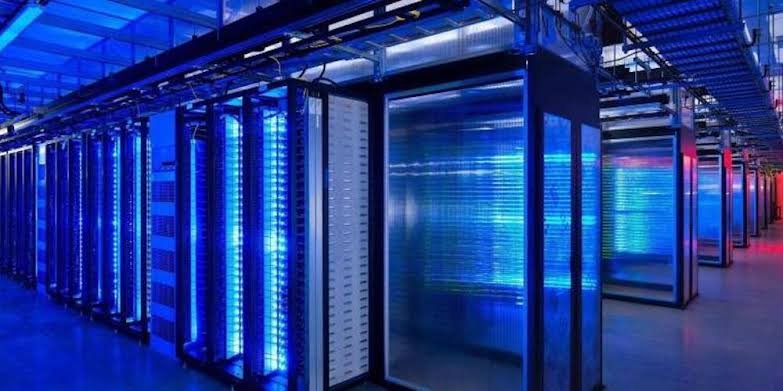
India is rapidly expanding its high-performance computing capabilities with the National Supercomputing Mission (NSM) emerging as a key pillar of the country’s technology and research infrastructure. As of September 2026, the mission has deployed 40 supercomputers with a combined capacity of 68 petaflops, strengthening access to advanced computing for scientific research, academia and strategic applications.
Launched in 2015 with an outlay of around ₹4,500 crore, the NSM is jointly steered by the Department of Science and Technology and the Ministry of Electronics and Information Technology with C-DAC and IISc as implementing agencies. Its focus has increasingly shifted towards indigenous development of servers, system software, networking and cooling technologies.
The expansion is significant because supercomputing is no longer limited to theoretical research. High-performance computing is being deployed for weather prediction, climate modelling, computational biology, drug discovery, disaster management, astrophysics, big-data analytics and engineering simulations. These capabilities can improve the speed and quality of decision-making in areas directly linked to public welfare and economic productivity.
The development of indigenous Rudra servers and Trinetra HPC interconnect technology is also strengthening India’s technology sovereignty. The PARAM Rudra systems demonstrate the shift from assembling imported components towards greater domestic design and manufacturing capability.
The broader governance impact lies in creating a distributed computing network accessible to universities, research institutions, startups and industry. The National Knowledge Network provides the connectivity backbone, allowing computational resources and research capabilities to be shared across institutions.
Impact: India’s emerging supercomputing ecosystem can reduce dependence on imported high-end computing technologies while accelerating research, AI development, advanced manufacturing and scientific innovation. The next challenge will be to scale domestic semiconductor, processor and accelerator capabilities alongside computing infrastructure, ensuring that India’s supercomputing growth translates into deeper technology self-reliance and globally competitive innovation.