PM-SETU: One Year of Transforming India’s ITI Ecosystem
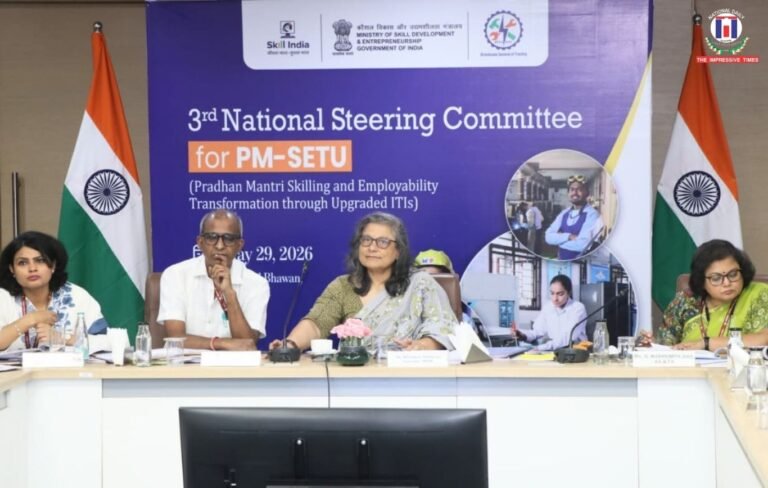
The Pradhan Mantri Skilling and Employability Transformation through Upgraded ITIs (PM-SETU) has completed its first year, marking a shift from conventional vocational training towards an industry-linked, technology-driven and outcome-oriented skilling ecosystem. Launched on 4 October 2025, the ₹60,000-crore scheme is designed to transform 1,000 government Industrial Training Institutes (ITIs) through a hub-and-spoke model with financial participation from the Centre, States and industry.
The scheme envisages 200 Hub ITIs and 800 Spoke ITIs, with modern infrastructure, upgraded laboratories, smart classrooms, digital learning resources and courses aligned with emerging industrial requirements. It also provides for capacity augmentation of five National Skill Training Institutes (NSTIs), including National Centres of Excellence focused on advanced skilling and training of trainers.
The first year has moved PM-SETU from policy design towards implementation. 850 ITIs have been identified, comprising 172 Hub and 678 Spoke ITIs. All 36 States and Union Territories have identified clusters and created dedicated budget heads, while 35 have constituted State Steering Committees. Industry participation has also begun gaining institutional shape through cluster-level Strategic Investment Plans and Special Purpose Vehicles.
A defining feature is the industry-led governance model. Anchor industry partners are envisaged to hold a 51% stake in the SPVs with the Centre and States holding 24.5% each. This structure is intended to connect curriculum, equipment, training delivery and industry exposure directly with local economic demand.
The scale of the intervention comes against a growing ITI ecosystem. The number of ITIs has risen from 9,776 in 2014 to 13,888 in 2026, while enrolment increased from 9.51 lakh in 2014–15 to 14.70 lakh in 2025–26.
The next phase will determine whether PM-SETU can convert institutional restructuring into measurable gains in employment, apprenticeship, productivity and industry-ready skills. With manufacturing, electronics, automotive, renewable energy and other emerging sectors demanding specialised manpower, the success of the scheme will be critical to building a workforce aligned with India’s Viksit Bharat ambitions.