Rishikesh–Karnaprayag Rail Project Achieves 79% Progress Nears Completion of Himalayan Tunnel Network
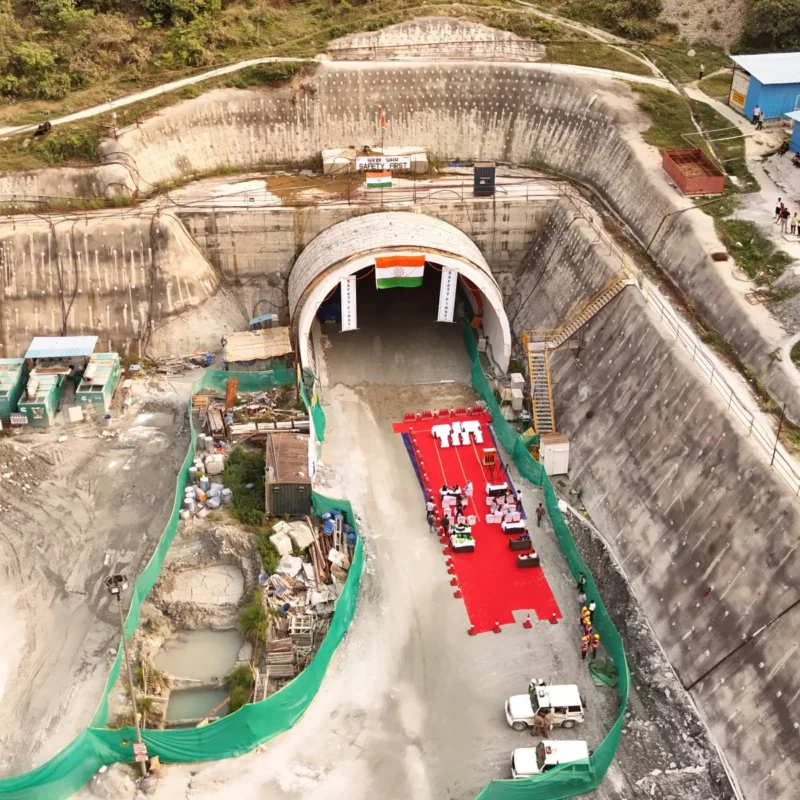
The ambitious Rishikesh–Karnaprayag railway project in Uttarakhand has achieved 79 per cent overall physical progress with approximately 97 per cent of tunnel excavation completed, marking a significant milestone in India’s Himalayan infrastructure development. Being executed by Rail Vikas Nigam Limited under the Ministry of Railways, the 125-km railway project is estimated to cost ₹37,119 crore and is targeted for completion by December 2029.
The strategically important railway corridor will connect Rishikesh with Karnaprayag, passing through Dehradun, Tehri Garhwal, Pauri Garhwal, Rudraprayag and Chamoli districts. It is designed to improve accessibility to remote Himalayan regions while strengthening connectivity to important religious and tourism destinations including Devprayag and Karnaprayag.
The project involves constructing 16 main tunnels spanning approximately 104 km and 12 escape tunnels covering nearly 98 km. The extensive tunnelling requirement reflects the engineering complexity of developing railway infrastructure across challenging Himalayan geology. Additionally, eight access tunnels, known as adits have been completed to accelerate excavation by creating additional working points. Of the 19 major bridges planned, 11 have also been completed.
Strategic Connectivity and Regional Development
The railway line is expected to significantly reduce travel time, improve year-round accessibility and strengthen the Char Dham pilgrimage corridor. It will also support tourism, facilitate transportation of goods and services, generate employment and create new economic opportunities for communities in Uttarakhand’s mountainous districts.
Beyond passenger connectivity, the project carries strategic importance by strengthening infrastructure penetration in border-adjacent Himalayan regions. Its completion will represent a major advancement in India’s capacity to execute complex railway projects in difficult geographical conditions.
The latest progress highlights the government’s push towards integrating remote regions through modern transport infrastructure.