Strategic Diplomacy Governance: India Reinforces Counter-Terrorism Position at UNGA as Hormuz Crisis Deepens
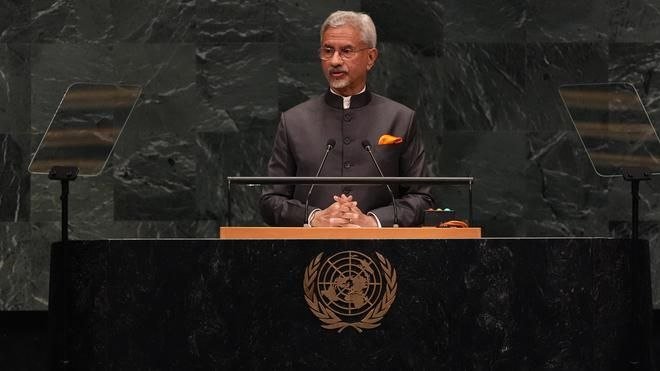
India’s diplomatic position on terrorism, regional security and international trade routes came into sharper focus at the 81st United Nations General Assembly, as External Affairs Minister S. Jaishankar responded to Pakistan’s statements and highlighted the wider consequences of ongoing conflicts.
Addressing the UN General Debate, Jaishankar said attempts to normalise terrorism or seek immunity from its consequences would not be accepted. Without naming Pakistan directly, he described it as a “serial practitioner of terrorism” and reiterated that India retains the right to defend itself against terrorism. His remarks followed Pakistan Prime Minister Shehbaz Sharif’s UNGA address, in which he raised Kashmir and the Indus waters issue.
The Indus Waters Treaty remains a major point of India-Pakistan contention. Pakistan has warned against any attempt to stop or divert its share of Indus waters while India has maintained that the treaty remains in abeyance following the 2025 Pahalgam terror attack and linked its position to cross-border terrorism.
At the same time, India raised concerns over the security of international shipping amid the Gulf conflict. Jaishankar said attacks on commercial vessels and seafarers were unacceptable and called for restraint, civilian protection and uninterrupted movement of energy and commerce.
The Strait of Hormuz has emerged as a critical economic flashpoint. US President Donald Trump rejected Iran’s proposed seven-day roadmap for reopening the waterway and restoring maritime passage. The development keeps uncertainty elevated around energy supplies and global shipping.
Governance Impact: The developments underline the growing link between strategic diplomacy, counter-terrorism, maritime security, energy supply chains and global economic stability.