
India’s New-Age Space Technologies: Reusable Rockets, Space Docking and Human Spaceflight to Drive Strategic Self-Reliance
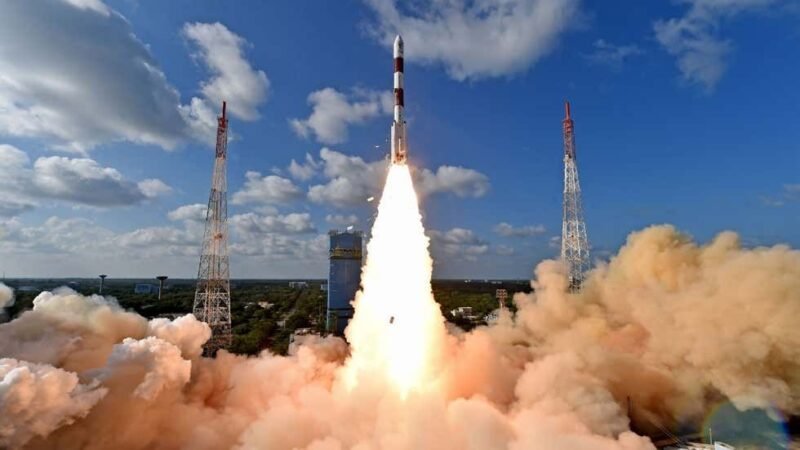
India is transitioning from conventional satellite launches to advanced space technologies that can strengthen national security, scientific research, digital infrastructure and commercial competitiveness. The Indian Space Research Organisation is developing next-generation launch vehicles, reusable rocket systems, satellite networks, space robotics and human-spaceflight capabilities. Under its long-term Space Vision 2047, India aims to establish the Bharatiya Antariksh Station by 2035 and achieve an Indian lunar landing by 2040.
A major milestone was achieved through the Space Docking Experiment which demonstrated autonomous spacecraft docking in January 2025, making India the fourth country to achieve this capability. Space docking is essential for future space-station operations, complex orbital missions, satellite servicing and lunar exploration. Meanwhile missions such as Chandrayaan, Aditya-L1 and XPoSat are expanding India’s capabilities in lunar exploration, solar research and high-energy astrophysics.
Advanced Technologies and Strategic Impact
Reusable launch vehicles, advanced propulsion systems and cost-efficient satellite launch technologies are central to India’s emerging space strategy. ISRO is pursuing technologies involving rocket recovery, orbital re-entry, semi-cryogenic engines and improved launch systems to reduce costs and increase mission flexibility. The Small Satellite Launch Vehicle is designed to meet the growing demand for compact satellites and commercial launch services.
The Gaganyaan programme seeks to establish India’s indigenous human-spaceflight capability. Simultaneously, NavIC provides independent navigation services, while Earth-observation satellites support agriculture, disaster management, weather forecasting, environmental monitoring and infrastructure planning.
Governance and Economic Significance
India’s new-age space technologies represent more than scientific progress; they are becoming instruments of strategic autonomy, economic growth and technology-led governance. Private enterprises and start-ups are expanding their presence in satellite manufacturing, launch services, space-based data and component development. The expansion of the domestic space industry can generate skilled employment, encourage advanced manufacturing and strengthen India’s position in the global commercial space market.
The key policy challenge is to translate technological achievements into affordable public services, globally competitive businesses and sustained domestic innovation. Continued investment in research, skilled manpower, reliable infrastructure and public-private partnerships will be essential.
India’s next-generation space technologies are laying the foundation for its transition from a capable satellite-launching nation to a major space innovation power. Progress in reusable rockets, orbital docking, navigation, lunar exploration and human spaceflight will shape the country’s strategic and economic position in the coming decades. Effective implementation of Space Vision 2047 will depend on technological reliability, commercial scalability and the ability to convert space research into measurable public and economic benefits.