
India Joins US-Led Manufacturing Pact, Signals Push for Fairer Global Trade
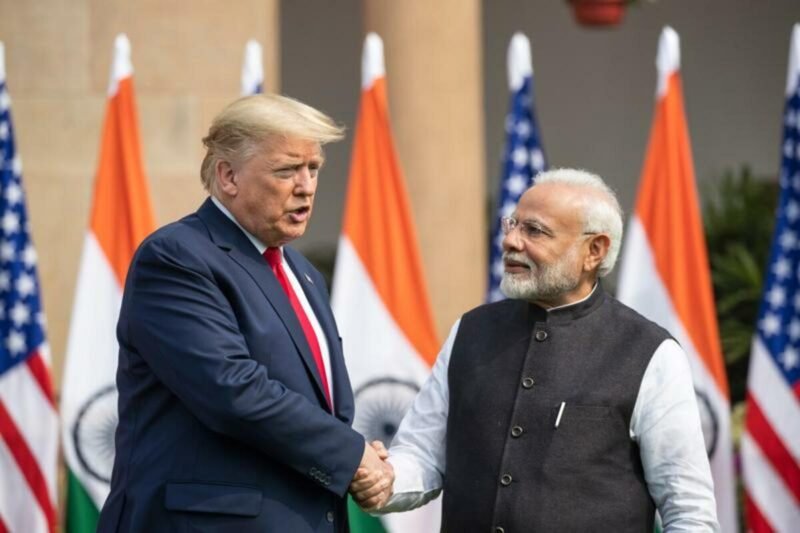
India has joined the United States and 13 other economies in signing a joint ministerial statement to address structural excess manufacturing capacity and curb policies that distort global markets. The statement, released on October 7, marks a renewed effort by major trading economies to strengthen market-oriented competition, protect domestic industries and reduce the adverse effects of persistent industrial overproduction.
The initiative brings together 15 participants including India, the US, the European Union, Japan, Germany, France, the United Kingdom, Australia, Canada, South Korea, Italy, Mexico, Argentina, Poland and Türkiye. It follows discussions at the G20 Trade Ministers’ Meeting in Milwaukee, where participating economies highlighted concerns over production exceeding global demand and the role of government support in creating market distortions.
Sectoral Cooperation and Market Stability
The participating economies plan to establish dedicated sectoral platforms focusing initially on automobiles and electric vehicles, batteries, chemicals, foundational semiconductors and solar panels. These platforms will facilitate information-sharing, examine manufacturing imbalances and explore coordinated measures to address their impact on trade, investment and employment.
Excess capacity can depress prices, discourage fresh investment, weaken domestic producers and create excessive dependence on concentrated supply chains. The joint statement argues that addressing these distortions through cooperation could improve competition and strengthen the resilience of manufacturing ecosystems.
Strategic Implications for India
India’s participation carries particular significance as the country expands domestic manufacturing under its industrial development and supply-chain diversification agenda. However, New Delhi has maintained that manufacturing capacity alone does not constitute excess capacity and that trade-distorting practices should be addressed through evidence-based, WTO-consistent measures.
The move also comes amid a separate US trade investigation into alleged excess industrial capacity involving India and other economies. This makes the initiative both an opportunity for engagement and a test of India’s ability to safeguard its industrial policy priorities.
Ultimately, the pact could influence global manufacturing rules, investment flows and export competitiveness. For India, the central governance challenge will be to support fair competition while preserving the policy space needed to expand domestic production, generate employment and strengthen its position in global value chains.