
IMEI Tampering Raises Concerns Over India’s Digital Security
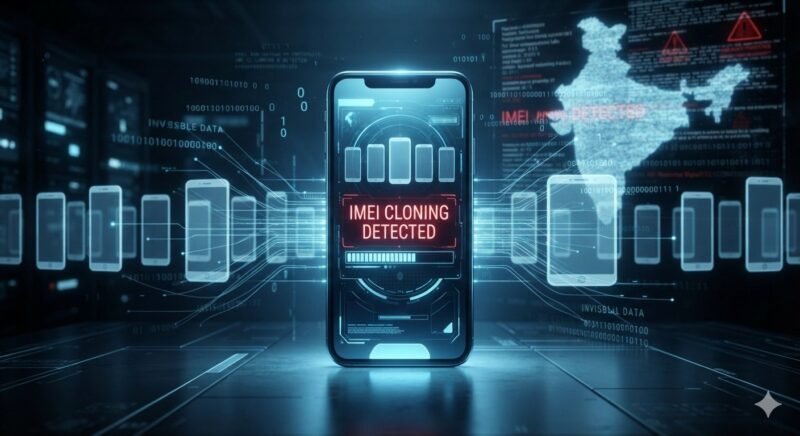
India’s rapidly expanding digital ecosystem has increased the importance of securing mobile devices and telecommunications networks. With more than 1.2 billion active wireless mobile subscribers as of July 2026, mobile connectivity has become central to digital payments, online services, business and governance.
Alongside this growth, concerns over the misuse and tampering of International Mobile Equipment Identity (IMEI) numbers have gained attention. Altering or misusing an IMEI can make it difficult to identify a device accurately on telecommunications networks and may create challenges for network security, consumer protection and law enforcement.
What Is IMEI Tampering?
An IMEI is a unique 15-digit number used to identify a mobile device on a telecommunications network. Deliberately removing, altering or manipulating an IMEI is prohibited under Indian law.
The rules also cover the deliberate use, manufacture, trafficking, possession or control of hardware or software that is known to have been configured to facilitate such manipulation.
The first eight digits of an IMEI form the Type Allocation Code (TAC), which identifies the device model or type. TAC allocations are managed globally by the GSM Association (GSMA), while manufacturers assign individual IMEI numbers to devices.
Dual-SIM phones generally have two IMEI numbers, one for each SIM slot. Users can check the IMEI of their device by dialling.
How Consumers Can Verify an IMEI
Consumers can verify device information through the Sanchar Saathi platform or its mobile application. IMEI verification can also be carried out through SMS by sending:
KYM <15-digit IMEI number>
to 14422.
The verification process can provide information such as the device’s brand, model and manufacturer, helping consumers identify potentially problematic or counterfeit devices.
Responsibilities Across the Device Supply Chain
Preventing IMEI-related misuse requires cooperation from manufacturers, importers, retailers, brand owners and consumers.
Manufacturers are required to register relevant IMEI numbers with the government before devices are sold, tested, used for research or otherwise deployed in India. They must also ensure that devices carry genuine, unique and untampered IMEI numbers.
Importers are required to register IMEI numbers for applicable telecommunications equipment before importing the devices into India. They must ensure that imported devices carry authorised and valid identifiers.
Resellers and retailers are expected to verify that devices offered for sale have genuine and untampered IMEI numbers. Dealers involved in used-device transactions are also expected to check IMEI information against the relevant central database before completing transactions.
Brand owners must ensure that devices sold under their brands comply with applicable IMEI registration and cybersecurity requirements and are linked with the appropriate GSMA Type Allocation Codes.
Activities Consumers Should Avoid
Consumers are advised to stay away from devices or services involving manipulated or configurable IMEI numbers. They should also avoid activities such as obtaining SIM cards through fraudulent documents or impersonation, transferring SIM cards registered in their name to other people, or using applications and services designed to manipulate the Calling Line Identity (CLI) or other telecommunications identifiers.
Sanchar Saathi for Device Security
The Sanchar Saathi platform provides consumers with tools to verify mobile devices and access telecommunications-related services.
The platform can help users check whether the IMEI information associated with a handset matches details such as its brand, model and manufacturer. It also provides mechanisms for dealing with lost or stolen mobile devices.
What Consumers Should Do
Consumers can take several steps to protect their devices and telecommunications identity:
- Purchase mobile phones and other relevant devices from authorised sellers.
- Check the IMEI before purchasing a device.
- Use strong passwords, PINs or biometric authentication.
- Have devices repaired through authorised service centres.
- Report lost or stolen devices to the police immediately.
- Obtain a replacement SIM from the telecommunications operator when necessary.
- Use the Sanchar Saathi/CEIR system to request blocking of a lost or stolen handset.
- If a lost device is recovered, inform the police and follow the official procedure to unblock it.
Legal Protection Against IMEI Tampering
India’s Telecommunications Act, 2023 provides legal provisions against tampering with telecommunications identifiers, including IMEI numbers.
Section 42(3)(c) prohibits tampering with telecommunications identifiers, while Section 42(3)(e) addresses obtaining SIMs or telecommunications identifiers through fraud, forgery or impersonation.
Violations can carry penalties of up to three years’ imprisonment, a fine of up to ₹50 lakh, or both. Under Section 42(7), such offences are classified as cognizable and non-bailable. Section 42(6) also provides for action against individuals who assist or encourage such offences.
Protecting India’s Digital Infrastructure
As India’s dependence on mobile connectivity continues to grow, maintaining the integrity of device identifiers has become an important part of telecommunications security.
Secure manufacturing, proper IMEI registration, verification mechanisms, responsible retail practices and consumer awareness can collectively help reduce the risks associated with counterfeit or manipulated devices.
Protecting the integrity of mobile devices is therefore not limited to manufacturers or regulators. It requires coordinated responsibility across the entire telecommunications ecosystem, from production and import to retail and everyday consumer use.