Delhi Police Denies Mass Surveillance at Jantar Mantar Protests
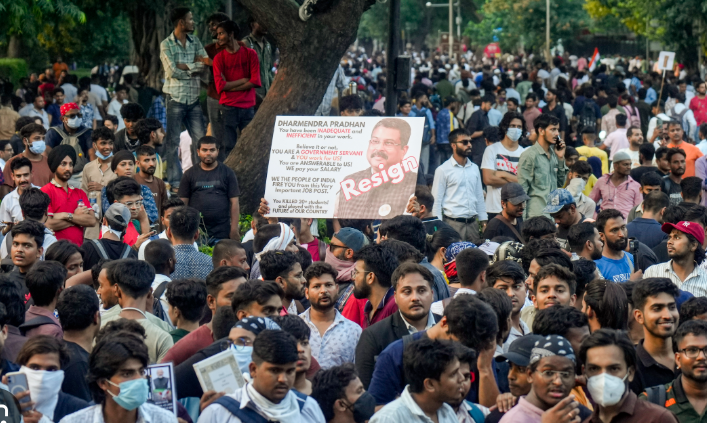
New Delhi: The Delhi Police has denied allegations of mass surveillance and indiscriminate monitoring of protesters at Jantar Mantar, telling the Supreme Court that its facial-recognition system was deployed for a specific law-and-order purpose rather than to monitor ordinary demonstrators.
The controversy relates to the use of AI-assisted facial recognition and surveillance equipment during recent student protests at Jantar Mantar. The deployment raised concerns among protesters and civil-liberties advocates over privacy, biometric data collection and the potential impact of surveillance on the right to peaceful assembly.
Police: Technology Targeted Known Criminals
In its submission before the Supreme Court, Delhi Police maintained that facial-recognition technology was used to identify individuals who already had records relating to serious offences. According to the police, the system was not intended to create profiles of peaceful protesters or conduct indiscriminate surveillance.
The police said that facial-recognition technology functioned as an initial identification mechanism. Any potential match was required to be subjected to physical verification by police personnel before further action was taken. The police also clarified that the exercise was focused on individuals already appearing in its criminal-record databases.
Earlier, police officials had similarly stated that facial-recognition units deployed around Jantar Mantar were intended to identify wanted persons, absconders and history-sheeters who could potentially exploit a large public gathering to create law-and-order problems.
Surveillance Debate Reaches Courts
The issue has become part of a wider legal debate over the use of emerging technologies by law-enforcement agencies. A petition before the Delhi High Court challenged the alleged continuous videography and facial recognition of people participating in the protests, arguing that such practices could affect privacy, freedom of expression and the constitutional right to peaceful assembly.
The Centre and Delhi Police have maintained that videography at Jantar Mantar is a routine security measure designed to maintain public order and protect people at protest sites. Solicitor General Tushar Mehta had told the Delhi High Court that recording at the venue was carried out for law-and-order and public-safety purposes, rejecting the allegation that authorities were engaged in unlawful snooping.
Privacy and Proportionality Remain Key Concerns
The controversy has also highlighted a significant governance challenge: how can governments use modern policing technologies while protecting citizens’ fundamental rights?
Facial recognition can potentially assist law-enforcement agencies in identifying individuals who are already wanted in connection with serious offences. However, its use in public gatherings raises questions regarding the scope of data collection, retention, access, accuracy and accountability.
Legal experts and civil-rights groups have argued that surveillance measures should satisfy the constitutional principles of legality, necessity and proportionality. India currently does not have a dedicated statutory framework specifically governing police use of facial-recognition technology, leaving important questions about watchlists, matching standards, retention periods and independent oversight.
Governance Significance
From a governance perspective, the Jantar Mantar controversy underlines the importance of establishing clear, transparent and accountable protocols for technology-enabled policing.
Security agencies have a legitimate responsibility to prevent criminal activity and maintain public order during large demonstrations. At the same time, citizens participating in peaceful protests must be able to exercise their democratic rights without disproportionate interference.
The case therefore goes beyond one protest site. It raises broader questions about privacy in public spaces, responsible use of artificial intelligence, police accountability and the protection of constitutional freedoms in the digital era.
As the matter receives judicial consideration, the eventual legal framework could have wider implications for the deployment of facial-recognition systems at protests, public gatherings and other sensitive civic spaces across India.