Rail Connectivity to Give New Momentum to the Gwalior-Chambal Region
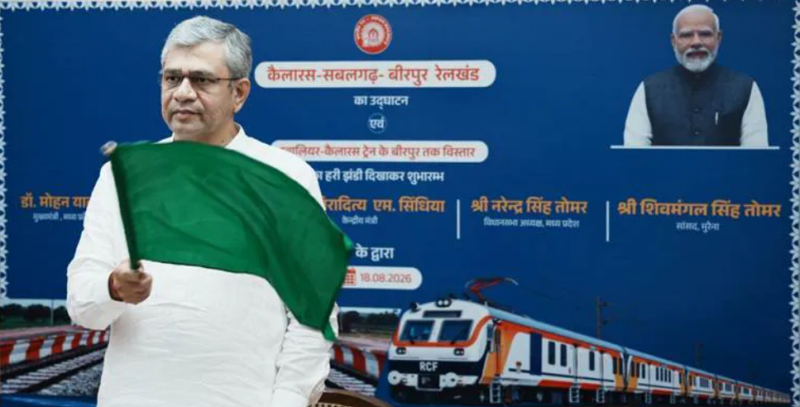
The strengthening of rail connectivity in the Gwalior-Chambal region is expected to provide a significant boost to economic activity, regional mobility and infrastructure-led development. Improved railway infrastructure can play an important role in connecting the region with major commercial centres, facilitating the movement of people and goods and supporting the expansion of tourism, agriculture, industry and services.
The Gwalior-Chambal region holds considerable strategic and economic importance due to its geographical position and proximity to major markets in central and northern India. Strengthening rail links can improve accessibility for both urban and rural communities while creating better conditions for investment and enterprise development.
Improved Mobility and Regional Connectivity
Enhanced railway connectivity can reduce travel time and improve the reliability of passenger movement across the region. Better rail services can provide residents with easier access to educational institutions, healthcare facilities, employment opportunities and administrative centres.
For the government, stronger rail infrastructure also supports a more integrated regional development framework. Improved connectivity between Gwalior, Morena, Bhind, Sheopur and other parts of the wider region can help reduce geographical barriers and encourage greater economic interaction between districts.
Boost to Trade and Logistics
Railways remain an important component of India’s multimodal transportation network. Improved rail infrastructure in the Gwalior-Chambal belt can strengthen the movement of agricultural commodities, industrial products, construction materials and other commercial consignments.
Efficient rail-based transportation can also complement road connectivity and contribute to lower logistics costs. Better integration between railway networks, roads, warehouses and logistics facilities can help businesses move goods more efficiently to larger markets.
For agriculture-dependent areas, improved logistics can support faster transportation of farm produce and strengthen market access. This can contribute to a more efficient supply chain and create opportunities for value addition, storage and agro-processing.
Support for Industrial Development
Reliable connectivity is a key factor influencing investment decisions. Strengthened railway infrastructure can improve the attractiveness of the Gwalior-Chambal region for manufacturing, processing, warehousing and logistics-related activities.
Improved connectivity with major industrial and commercial centres can enable enterprises in the region to access raw materials and markets more efficiently. It can also support the development of industrial clusters and ancillary businesses, generating employment opportunities for local communities.
The availability of dependable transport infrastructure can therefore complement broader government efforts aimed at promoting balanced regional development and encouraging private-sector participation.
Tourism Potential
Gwalior-Chambal has substantial tourism potential, supported by its historical heritage, cultural assets, forts, temples, wildlife areas and distinctive regional landscape. Better railway connectivity can make these destinations more accessible to domestic and international visitors.
Gwalior’s historical attractions, along with destinations across the Chambal region, can benefit from improved passenger connectivity and tourism-oriented infrastructure. Increased tourist movement can create opportunities for hotels, restaurants, transport services, handicrafts, local markets and other tourism-linked enterprises.
A stronger tourism ecosystem can also generate employment for local youth and provide additional income opportunities for small businesses and communities.
Employment and Local Economic Opportunities
Infrastructure development generally creates economic activity beyond the core transport sector. Improved rail connectivity can generate demand for construction, maintenance, logistics, hospitality, retail and other supporting services.
Greater connectivity can also improve labour mobility, enabling people to access employment and education opportunities beyond their immediate districts. In the longer term, this can contribute to a more diversified regional economy.
For young people, better transportation networks can strengthen access to skill-development institutions, higher education centres and emerging employment hubs.
Towards Balanced Regional Development
Strengthening railway connectivity should be viewed as part of a broader infrastructure strategy rather than as an isolated transport initiative. Its benefits can be maximised through coordinated development of roads, logistics facilities, urban infrastructure, industrial areas and tourism destinations.
An integrated approach can help ensure that the economic benefits of improved connectivity reach smaller towns and rural areas along the transport corridor. This would support the objective of more balanced and inclusive regional development.
Governance and Development Perspective
From a governance perspective, improved rail connectivity can contribute to better public service delivery, economic integration and infrastructure efficiency. Coordinated planning among the Centre, State government, railway authorities and local administrations will be important for ensuring timely implementation and effective utilisation of infrastructure.
The focus should also remain on passenger safety, station modernisation, last-mile connectivity, accessibility and environmentally responsible infrastructure development. Digital services and improved passenger amenities can further enhance the overall travel experience.
Conclusion
The strengthening of rail connectivity has the potential to become an important catalyst for the transformation of the Gwalior-Chambal region. By improving mobility, supporting trade and logistics, facilitating industrial activity and unlocking tourism potential, better railway infrastructure can contribute to sustained economic growth.
With coordinated infrastructure planning and effective implementation, enhanced rail connectivity can strengthen the region’s links with major economic centres while creating new opportunities for employment, investment and local enterprise. The initiative can therefore play an important role in advancing connectivity-driven and inclusive development across Gwalior-Chambal.