PM Modi Unveils ₹15,600 Crore Development Push, Strengthens Karnataka’s Metro, Renewable Energy and Rail Infrastructure
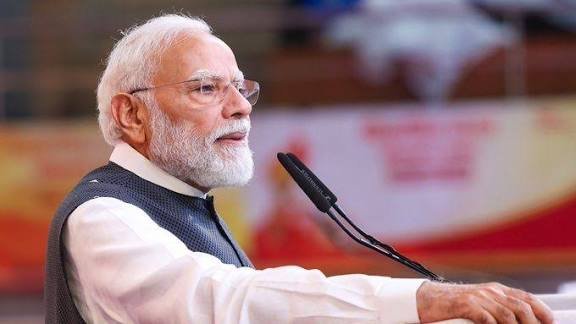
Prime Minister Narendra Modi arrived in Bengaluru on November 13, 2026 to launch a major development drive centred on urban mobility, renewable energy, power transmission, petroleum infrastructure, waste management and railway connectivity. The Prime Minister inaugurated, dedicated to the nation and laid the foundation stones for projects worth over ₹15,600 crore, reinforcing Karnataka’s infrastructure-led growth strategy.
A major highlight was the inauguration of Bengaluru Metro’s Pink Line between Kalena Agrahara and Tavarekere developed at an estimated cost of ₹3,470 crore. The new corridor is expected to improve urban mobility, reduce commuting time and strengthen the city’s public transport network.
In the renewable energy sector, projects worth ₹4,450 crore in Koppal and Gadag and ₹1,370 crore in Bidar were inaugurated to facilitate the evacuation of approximately 4.5 GW of renewable power. Foundation stones were also laid for transmission infrastructure worth over ₹4,550 crore to integrate additional renewable energy capacity.
Energy security received a major boost with the dedication of India’s largest underground LPG storage cavern in Mangaluru built at a cost exceeding ₹850 crore with a capacity of 80,000 metric tonnes. The ₹330-crore Devangonthi Marketing Terminal was also dedicated to strengthen petroleum distribution. Additionally, the foundation stone was laid for a GAIL compressed biogas plant capable of processing 300 tonnes of municipal waste daily.
Railway infrastructure witnessed significant expansion with the inauguration of four redeveloped stations under the Amrit Bharat Station Scheme, the dedication of the 45-km Bagalkot-Wandal doubling section and electrification of the 55-km Sakleshpur-Subrahmanya Ghat section. The Bengaluru-Mangaluru-Madgaon Vande Bharat Express was also flagged off.
The initiatives reflect a multi-sector infrastructure strategy aimed at improving logistics efficiency, strengthening energy security, accelerating clean energy integration and expanding regional economic connectivity.