India Moves Towards E100 Mobility: Nitin Gadkari to Launch Toyota’s 100% Ethanol-Powered Innova on November 26
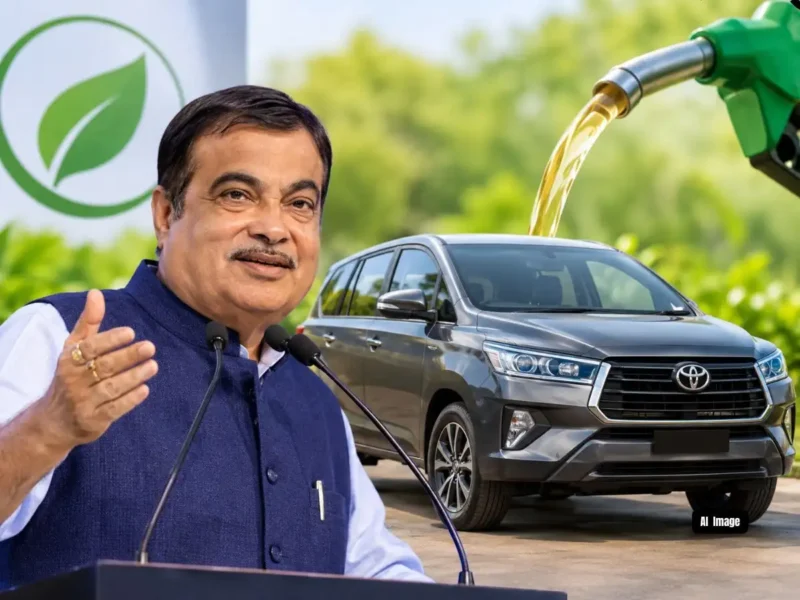
India’s alternative fuel transition is set to enter a new phase as Union Minister for Road Transport and Highways Nitin Gadkari prepares to launch Toyota’s 100% bioethanol-powered Innova on November 26, 2026. The announcement signals a push towards reducing dependence on imported fossil fuels while creating new economic opportunities for the agricultural sector.
Speaking at the ENRich 2026 energy conference in New Delhi, Gadkari said the upcoming vehicle would operate entirely on bioethanol instead of conventional petrol. He also confirmed that major automobile manufacturers including Tata Motors, Mahindra and Mahindra, Toyota, Maruti Suzuki and Hyundai are working towards developing flex-fuel vehicles capable of running on higher ethanol blends, including E100.
The minister highlighted the economic potential of bioethanol, stating that India currently spends approximately ₹22 lakh crore annually on fossil fuel imports. He argued that expanding domestic biofuel production could reduce foreign exchange outflows, strengthen energy security and generate additional income opportunities for farmers.
Gadkari also indicated that the upcoming Toyota vehicle could deliver substantial savings in operating costs. According to his estimates, ethanol costs approximately ₹75 per litre compared with petrol at around ₹120 per litre. He further stated that the vehicle’s hybrid technology could generate nearly 60% of its power through electricity while driving, bringing the effective running cost down to the equivalent of ₹25–30 per litre of petrol.
Governance Impact: The proposed launch represents an important development in India’s biofuel and automotive policy landscape. Greater adoption of ethanol-powered vehicles could strengthen the linkage between agriculture, energy production and industrial manufacturing. However, wider commercial adoption will depend on affordable ethanol availability, dedicated fuel infrastructure, vehicle affordability and compatibility standards. The initiative could also encourage investment in bio-refineries and agricultural waste-based fuel production, supporting India’s long-term objective of reducing petroleum import dependence.