Supreme Court Rules 24-Hour Arrest Deadline Begins From Actual Detention, Not Formal Arrest
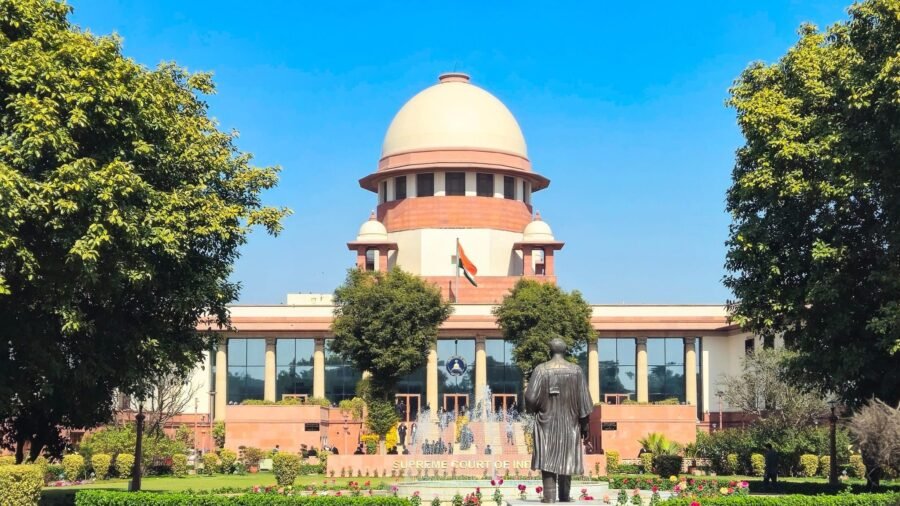
The Supreme Court has ruled that the constitutional 24-hour deadline for producing an individual before a magistrate begins from the moment of actual detention and curtailment of personal liberty, rather than the time when police formally record the arrest. The ruling reinforces the constitutional safeguards against arbitrary detention and prevents investigating agencies from delaying judicial oversight by postponing the formal arrest procedure.
A Bench comprising Justice Ujjal Bhuyan and Justice Atul S. Chandurkar held that any artificial distinction between detention and formal arrest is constitutionally unsustainable. Interpreting Article 22(2) of the Constitution alongside Section 56 of the Bharatiya Nagarik Suraksha Sanhita , the Court clarified that the only permissible exclusion from the 24-hour calculation is the time genuinely required for travelling from the place of arrest to the magistrate’s court.
The judgment arose from appeals filed by four individuals in a Tripura-based narcotics case involving the seizure of 11.03 kg of yaba tablets. The accused were detained on September 29, 2025, at 2 PM during search and seizure operations but were formally shown as arrested at 11 AM the following day. The Supreme Court held that the constitutional deadline had started at the time of their initial detention, making their continued custody without timely judicial production a violation of fundamental rights. It consequently directed their release.
The Court also disapproved of earlier High Court interpretations that permitted the pre-arrest detention period to be excluded while calculating the constitutional deadline. It emphasised that magistrates must independently verify the actual time when an individual’s liberty was curtailed and examine whether the detention remained legally reasonable.
Governance Impact: The ruling strengthens accountability in criminal investigations by closing procedural loopholes that could enable prolonged detention without judicial supervision. It reinforces the protection of personal liberty under Articles 21 and 22 places greater responsibility on investigating agencies and magistrates and establishes that constitutional safeguards cannot be diluted through administrative or procedural delays. The decision marks an important development in India’s criminal justice and custodial accountability framework.