India–Nepal Reset: ₹15,000-Crore Development Package Signals Strategic Push in Bilateral Relations
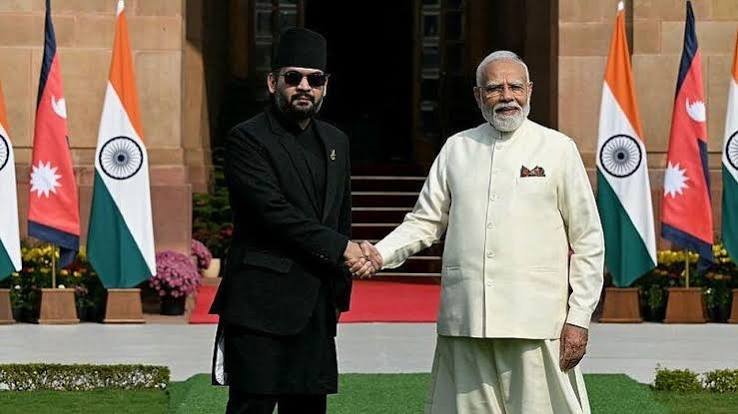
Nepal Prime Minister Balendra Shah’s first bilateral visit to India after assuming office culminated in a major expansion of the two countries’ development and economic partnership. During the November 22–23 state visit, Prime Minister Narendra Modi and Shah adopted a Joint Vision for “Viksit Bharat and Samunnat Nepal”, outlining cooperation across infrastructure, energy, trade, technology and people-to-people connectivity.
India announced development assistance worth ₹15,000 crore to Nepal. The package includes ₹3,500 crore in grants for post-disaster reconstruction and new infrastructure, alongside an ₹11,500-crore line of credit for energy projects. The support follows the devastating Rasuwa-Bhotekoshi floods and is expected to strengthen Nepal’s recovery and infrastructure capacity. Project details will be finalised through mutual consultations.
Connectivity emerged as a central outcome. The leaders flagged off the Sarayu-Kamala Express rail service between Ayodhya and Janakpur, opening possibilities for religious tourism along the Ramayana Circuit. They advanced plans for the Raxaul-Kathmandu electrified railway, inaugurated a Dharchula-Darchula motorable bridge and initiated a new Integrated Check Post at Banbasa. Nepal will gain a transit-trade route through Deendayal Port at Kandla, while the Kathmandu-Bhairahawa-Lucknow aviation route will become bidirectional.
Energy cooperation received a push through the foundation stone for the 669-MW Lower Arun hydropower project and progress on cross-border transmission lines and petroleum infrastructure. India will also establish an offshore IIT campus in Nepal. Eight agreements cover health, education, policing, civil-service training, satellite communications and sustainable urban development.
The visit signals a shift from diplomatic engagement to project-based regional integration. Effective execution will determine whether commitments translate into stronger supply chains, energy security, tourism and resilient border economies, creating tangible opportunities for local communities alike.