PM Modi and CM Vijay Inaugurate New Stretch, Strengthening Urban Connectivity
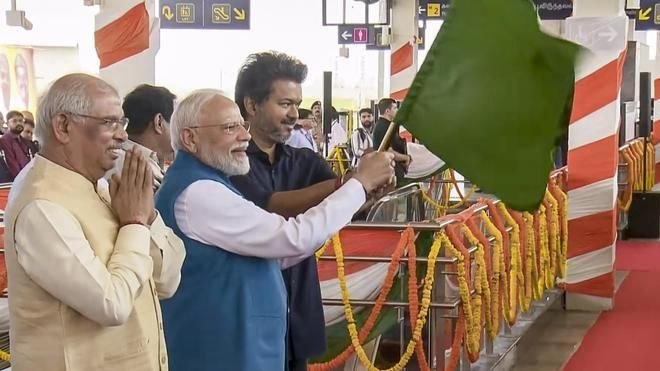
Chennai’s urban transport network has reached another milestone with Prime Minister Narendra Modi and Tamil Nadu Chief Minister C. Joseph Vijay inaugurating a stretch of Chennai Metro Rail’s Phase 2 project. The development is significant for the city’s expanding public transport requirements with metro connectivity playing a growing role in managing congestion, improving commuter mobility and supporting economic activity.
Phase 2 is designed to expand Chennai’s metro network beyond its existing corridors, connecting additional residential neighbourhoods, commercial centres and important urban destinations. The expansion is intended to make public transport more accessible while reducing dependence on private vehicles for daily travel.
Governance Impact: Mobility, Productivity and Urban Growth
Metro expansion is an important component of urban infrastructure planning. Improved connectivity can reduce commuting difficulties, make employment and educational institutions more accessible, and strengthen links between residential areas and business districts. Greater public transport use can also help ease road congestion and reduce transport-related emissions, depending on passenger adoption and service efficiency.
For Chennai, a major industrial, automotive, technology and services hub, reliable urban mobility is closely linked to workforce productivity and the ease of doing business. Better transport connectivity can support commercial activity by improving access to workplaces, markets and public services.
The wider impact, however, will depend on effective last-mile connectivity, service frequency, affordable fares, station accessibility and integration with buses and other transport systems. These operational factors will determine how effectively the expanded network translates into everyday benefits for commuters.
The Governance Perspective: Chennai Metro Phase 2 highlights the importance of linking infrastructure investment with practical urban outcomes. Beyond constructing new corridors, the priority is to create a connected, accessible and efficient public transport system that supports economic growth while improving the quality of urban life.