Delhi’s Pollution Crackdown Triggers Traffic Gridlock at Ghaziabad Border, Commuters Face Daily Delays
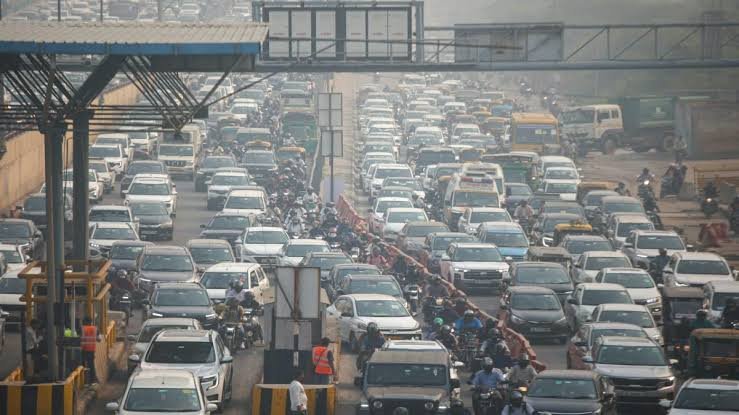
Traffic congestion between Ghaziabad and Delhi has intensified as police conduct vehicle emission-compliance checks during peak commuting hours, raising concerns over the implementation of pollution-control measures and urban mobility management in the National Capital Region .
The enforcement drive, which began on November 1, 2026 is part of Delhi’s winter pollution-control restrictions aimed at preventing non-compliant vehicles from entering the national capital. Under the restrictions, vehicles registered outside Delhi that do not meet Bharat Stage-VI emission standards are being denied entry.
Police have established checking points at six locations along the Ghaziabad-Delhi border including UP Gate, Media House, Seemapuri, Tulsi Niketan and Loni. The inspections have significantly affected traffic movement on the Delhi-Meerut Expressway and National Highway-9, particularly during morning office hours.
According to traffic police officials, 192 vehicles were checked on November 3, of which 38 were denied entry into Delhi. Personnel have been deployed at the six locations in two shifts to maintain enforcement throughout the day and night.
However, the checks have triggered criticism from commuters and environmental observers. Vehicles waiting in long queues and remaining stationary at checkpoints continue to release exhaust emissions, potentially worsening local air pollution. Commuters have also questioned the decision to conduct extensive manual inspections during peak traffic hours.
Governance and Policy Impact: The situation highlights the operational challenges of implementing environmental regulations across interconnected urban regions. While restricting highly polluting vehicles is an important measure for improving air quality, enforcement must also account for traffic efficiency and the economic cost of commuting delays. Greater use of automated number-plate recognition, CCTV surveillance and digital vehicle-compliance verification could reduce manual inspections and unnecessary congestion.
The episode underscores the need for coordinated action between Delhi and Uttar Pradesh authorities, combining pollution control, intelligent traffic management and technology-driven enforcement. Effective environmental governance must deliver cleaner air without creating additional mobility and pollution challenges for NCR residents.