Arvind’s ₹150 Crore Garment Plant Puts Varanasi on India’s Apparel Manufacturing Map
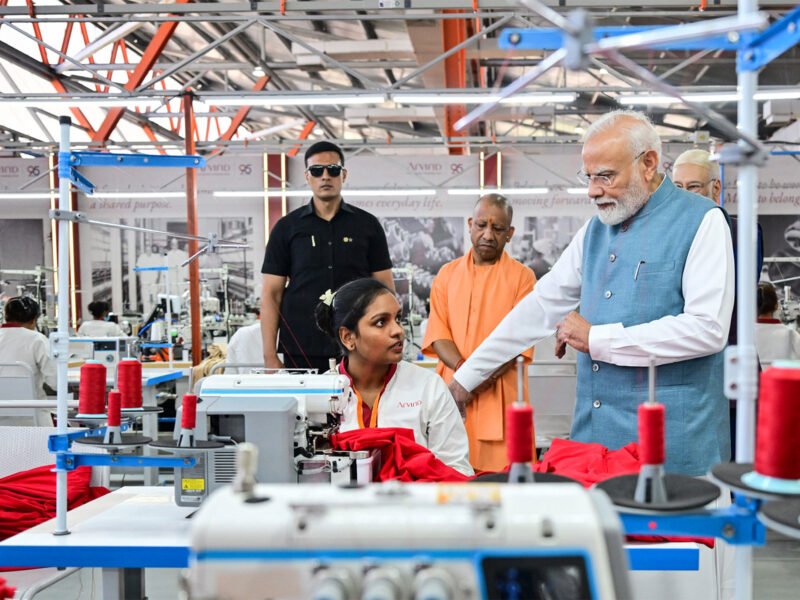
Prime Minister Narendra Modi inaugurated Arvind Limited’s greenfield garment manufacturing facility in Varanasi on October 25, marking the company’s entry into manufacturing operations in Uttar Pradesh. The ₹150 crore investment is expected to strengthen the state’s textile and apparel ecosystem, generate employment and expand India’s capacity to serve international garment markets.
Investment: Approximately ₹150 crore.
Employment: More than 1,000 jobs expected, predominantly for women.
Facility size: 5.5 acres, with approximately 65,000 square feet of built-up area.
Revenue potential: Estimated at ₹250 crore.
Technology: Automated sewing systems for knitwear production.
Industrial significance: Arvind Limited’s first manufacturing facility in Uttar Pradesh.
Manufacturing Expansion and Employment Generation
The facility is designed to manufacture knitwear products using advanced production technologies aimed at improving productivity, consistency and operational efficiency. Its predominantly women-led workforce gives the project an additional dimension: expanding formal employment opportunities and strengthening women’s participation in industrial production.
The investment could also stimulate demand for local services, logistics, transportation and other supporting businesses. Worker hostels and planned expansion of residential infrastructure are intended to support workforce welfare as operations grow.
Strategic Significance for Uttar Pradesh
The project strengthens Uttar Pradesh’s efforts to attract manufacturing investment beyond conventional industrial centres. Varanasi’s growing industrial role could help diversify the local economy, create opportunities for skill development and connect regional workers with organised manufacturing.
For Arvind, the facility represents a move towards vertical integration by linking its in-house knitted-fabric operations with garment production. This can strengthen production coordination, expand its product portfolio and improve its ability to serve customers in domestic and international markets, including Europe and the United Kingdom.
Governance & Economic Impact
The investment highlights the importance of combining industrial infrastructure, workforce development and private-sector participation to generate sustainable employment. Its long-term contribution will depend on actual job creation, capacity utilisation, workforce training and the development of local supply chains.
Governance Bharat Analysis: Arvind’s Varanasi facility is more than a new industrial unit. It is an opportunity to position eastern Uttar Pradesh within India’s expanding apparel manufacturing network with women-led employment and export-oriented production emerging as key measures of its economic impact.