Modi’s Two-Day Chintan Shivir to Focus on Reforms, Governance and Policy Implementation
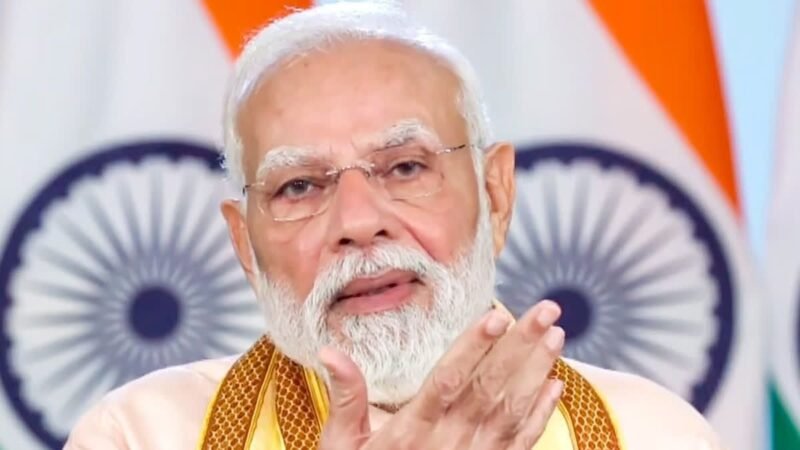
Prime Minister Narendra Modi is chairing a two-day Chintan Shivir of the Union Council of Ministers on September 23 and 24, with discussions expected to focus on governance, implementation of government programmes and the next phase of reforms.
The conclave is being held as the government approaches the halfway point of its current term. The discussions are expected to examine the progress of government schemes, policy implementation, public service delivery, time management and coordination between ministries.
Focus on Reforms and Governance
The meeting follows a series of discussions between the Prime Minister and senior government officials on improving administrative processes and strengthening institutional efficiency.
Key areas under discussion include better inter-ministerial coordination, reducing horizontal and vertical silos within government, greater use of technology and preparation of the government’s future policy agenda.
Ministries have also been encouraged to use live dashboards to monitor activities and review implementation. Feedback and suggestions from government employees are expected to form part of the broader governance discussions.
Ministers to Review Their Ministries
Union ministers are expected to present assessments of the work undertaken by their respective ministries, including policies and measures aimed at advancing reforms.
Earlier, the government had formed six groups of ministers, with eight ministers in each group, to deliberate on issues including time-bound implementation of government programmes and governance-related matters.
The groups have held meetings ahead of the two-day conclave and discussed presentations and proposals to be considered during the sessions.
Export and Energy Challenges
The Chintan Shivir is also taking place against the backdrop of challenges to India’s exports and energy security arising from the conflict in West Asia and the possibility of additional sanctions.
India has been working to diversify its export markets and sources of energy. The country has also been pursuing and operationalising free trade agreements with trading partners and blocs, including New Zealand, Canada and the European Union.
Seven-Pronged Reform Agenda
The government’s broader reform agenda also includes a seven-pronged strategy, referred to as Sapta Dhara, focusing on areas such as manufacturing, food processing, technology and innovation, connectivity, defence production, the green and blue economies and India’s soft power.
The agenda also places emphasis on creating employment opportunities and increasing the pace of reforms across the Centre, states and local governments.
One of the stated long-term objectives is to see 50 Indian companies enter the Fortune 500 within the next decade, alongside broader efforts to strengthen India’s economic and institutional capacity.
Political Context
The conclave is being held ahead of assembly elections scheduled in Uttar Pradesh, Punjab, Goa, Manipur and Uttarakhand. The meeting also comes amid speculation about a possible reshuffle of the Union Council of Ministers; however, such speculation does not by itself establish that a reshuffle will take place.
The Chintan Shivir is therefore expected to serve primarily as a platform for reviewing implementation, discussing reforms and coordinating the government’s priorities for the remainder of its current term.