
Giving New Energy to India’s Cultural Heritage Preserving the Past, Enriching the Future
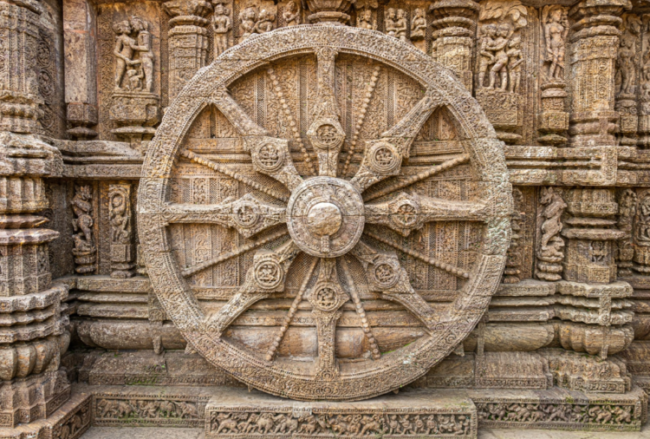
India’s cultural heritage reflects the country’s civilisational legacy and forms an important component of its national identity. The Government has undertaken a range of measures to preserve, restore and promote heritage through conservation programmes, tourism infrastructure, digitisation, technological interventions and the recovery of antiquities from abroad.
Under Adopt a Heritage 2.0, launched in September 2023, efforts are focused on developing and maintaining visitor-friendly facilities at centrally protected monuments. By March 2026, 30 Memoranda of Understanding had been signed under the initiative. During FY 2024–25, the adopted monuments recorded 1.359 crore visitors.
The PRASAD scheme is strengthening pilgrimage and heritage destinations through improved infrastructure, sanitation, safety and visitor amenities. By February 2026, 54 projects had been sanctioned across 28 States and Union Territories, with 32 projects completed by December 2025. The Swadesh Darshan programme has promoted thematic tourism circuits, while Swadesh Darshan 2.0 has shifted towards destination-centric development. Under the latter, 53 projects involving an investment of ₹2,208.31 crore have been approved.
The Archaeological Survey of India (ASI) remains a key institution for archaeological research and conservation. As of April 2026, it was protecting 3,686 centrally protected monuments through scientific conservation and restoration practices. The National Mission on Monuments and Antiquities has documented 1.84 lakh monuments and 17.20 lakh antiquities up to March 2026.
Heritage preservation is also being strengthened through the recovery of cultural objects taken abroad. During the five-year period ending June 30, 2026, a total of 615 antiquities were recovered. Significant examples include the return of the Piprahwa relics of Lord Buddha in 2025, 127 years after their removal from India, and the return of the Goddess Annapurna idol from Canada in 2021.
Digitisation has emerged as a major pillar of cultural preservation. The Gyan Bharatam Mission, launched in 2025, aims to preserve and digitise India’s manuscript heritage. The National Manuscript Survey has identified information relating to more than 1.19 crore manuscripts, while over 8 lakh manuscripts have been digitised. More than 4.40 lakh are currently available to the public through the Gyan Bharatam portal.
Technology is increasingly being integrated into heritage management through LiDAR scanning, GIS-based mapping, drone surveys and artificial intelligence. Platforms such as Bhashini, BharatGen and Adi Vaani are supporting multilingual access, translation and the preservation of tribal and traditional languages.
India’s cultural infrastructure is also expanding through museum modernisation and innovative institutions. The archaeological museum at Vadnagar, Gujarat, provides visitors with an experiential understanding of history alongside archaeological excavation. Meanwhile, the National Film Heritage Mission is preserving India’s cinematic legacy, with 1,469 films or titles digitised by December 2025.
India’s global cultural standing has also strengthened, with 45 UNESCO World Heritage Sites now recognised in the country. The international exhibition of the sacred relics of Lord Buddha in countries such as Vietnam, Russia, Bhutan and Sri Lanka has further contributed to cultural diplomacy and civilisational engagement.
Overall, India’s heritage policy increasingly combines conservation with tourism, technology, community participation and global cultural outreach. These initiatives seek not only to safeguard the country’s historical assets but also to make its cultural knowledge more accessible to present and future generations.