Supreme Court Upholds Suspension of Advocate for Breach of Client Confidentiality
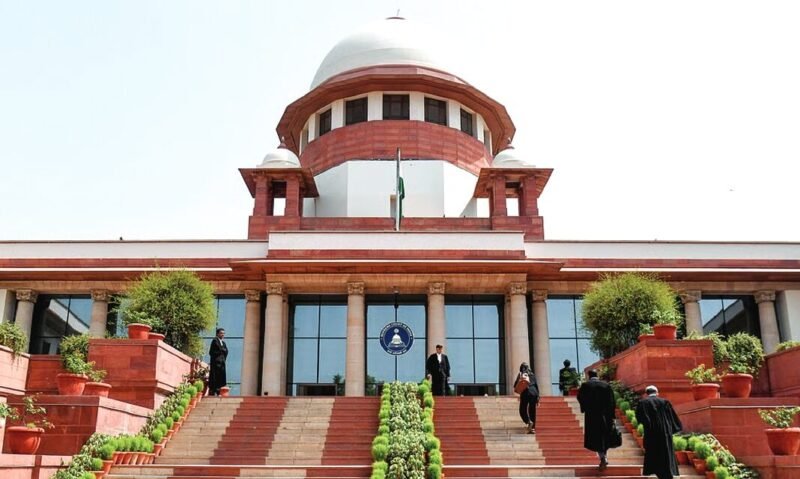
The Supreme Court has reaffirmed the fundamental professional duty of advocates to protect the confidentiality of information received from their clients, holding that such an obligation does not end merely because the professional relationship subsequently turns adversarial.
A Bench comprising Justice Vikram Nath, Justice Sandeep Mehta and Justice Vijay Bishnoi upheld the disciplinary action against an advocate whose licence to practise was suspended for two years after confidential information relating to a former client was disclosed publicly. The Court made it clear that an advocate cannot rely on a subsequent dispute with a client as justification for using confidential information against that client.
The matter arose from a complaint filed by Rehana Khan, also known as Rozlyn Khan, against advocate Rizwan Siddiquee under Section 35 of the Advocates Act, 1961. The dispute concerned the advocate’s disclosure of confidential communications and other information relating to the professional engagement during media interactions.
The Bar Council of India’s Disciplinary Committee had found the advocate guilty of professional misconduct in August 2025. It ordered removal of his name from the roll of advocates for two years, effectively preventing him from practising before courts, tribunals and authorities during that period. It also imposed a financial penalty of ₹3 lakh payable to the complainant and directed another ₹2 lakh to the Bar Council of India’s Welfare Fund.
The Supreme Court rejected the defence that the advocate had disclosed the information merely to respond to allegations made against him after the professional relationship had ended. The Court emphasised that an advocate’s duty of confidentiality is not dependent upon the client’s continued conduct towards the advocate. The fact that the former client had subsequently become an adversary did not permit disclosure of information received in confidence.
The Court also clarified that an advocate who believes that false allegations have been made against them has lawful remedies. Such an advocate may place their version before the investigating authorities or pursue appropriate legal proceedings, including defamation remedies. However, resorting to public platforms to disclose privileged or confidential client communications cannot be treated as an appropriate professional response.
The judgment carries wider significance for professional ethics and the administration of justice. The confidentiality attached to the advocate-client relationship is central to ensuring that individuals can communicate openly with legal professionals and obtain effective legal advice. A breach of this obligation can undermine public confidence in the legal profession and the justice delivery system.
At the same time, the Supreme Court declined to enhance the disciplinary punishment sought by the complainant. The Court observed that the conduct of both parties had to be considered, noting that the complainant had also made public statements concerning the dispute and had not disclosed all relevant material with complete candour.
The Court ultimately disposed of the connected appeals and imposed costs of ₹5 lakh each on the appellant and the respondent, directing that the amounts be deposited with the Supreme Court Legal Services Committee within four weeks.
The ruling reinforces the principle that professional responsibility continues to govern an advocate’s conduct even after the termination of the lawyer-client relationship. It also underscores that disputes between legal professionals and former clients must be addressed through established legal and disciplinary mechanisms rather than through public disclosure of confidential information.