ECI Faces Supreme Court Scrutiny Over Missing Records of Unanimous Approval for SIR Decisions
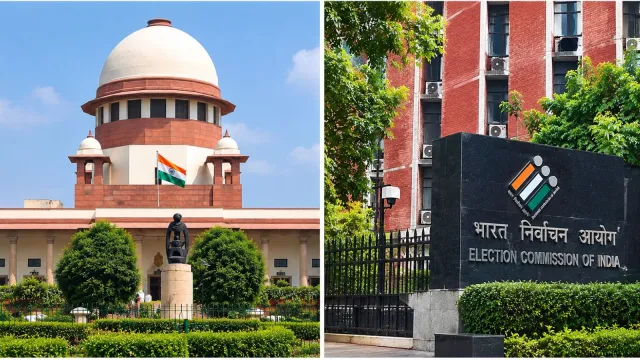
The Election Commission of India has come under renewed judicial scrutiny after a petitioner told the Supreme Court that the poll body failed to produce contemporaneous records establishing unanimous approval of key decisions concerning the Special Intensive Revision of electoral rolls.
In a rejoinder affidavit, petitioner Rakesh Kumar Singh challenged the ECI’s claim that all three Election Commissioners unanimously approved the SIR-related decisions. He argued that merely asserting unanimity without producing meeting minutes, file notings, resolutions, electronic approvals or other institutional records does not establish compliance with statutory procedures.
The petitioner has questioned whether the decisions were taken in accordance with Section 18 of the Chief Election Commissioner and Other Election Commissioners (Appointment, Conditions of Service and Term of Office) Act, 2023. The provision governs the Commission’s decision-making framework.
Questions Over Institutional Accountability
The affidavit also raises concerns over the additional declaration introduced alongside online Form 6 applications during the SIR exercise. The petitioner argues that the requirement effectively altered the voter-registration process without following the prescribed statutory procedure.
He has further questioned the authorisation of appeals filed against electoral inclusion orders in West Bengal and highlighted the difficulties faced by 97 eligible electors in Goa who allegedly could not complete their applications through the ECINet portal.
The petitioner maintains that subsequent corrective measures by the ECI, including separating the additional declaration from Form 6 and issuing fresh administrative directions, cannot retrospectively validate earlier decisions.
Governance Impact
The proceedings bring institutional transparency, electoral accountability and procedural compliance into focus. The case could have wider implications for how India’s constitutional election authority documents collective decisions, exercises administrative powers and safeguards citizens’ access to electoral registration.
The petitioner has sought production of original records to establish the authority and approval behind the disputed decisions. The ECI meanwhile maintains that its SIR decisions were unanimous and legally valid.