Supreme Court Limits Highway Encroachment Drives, Mandates Due Process Before Demolition
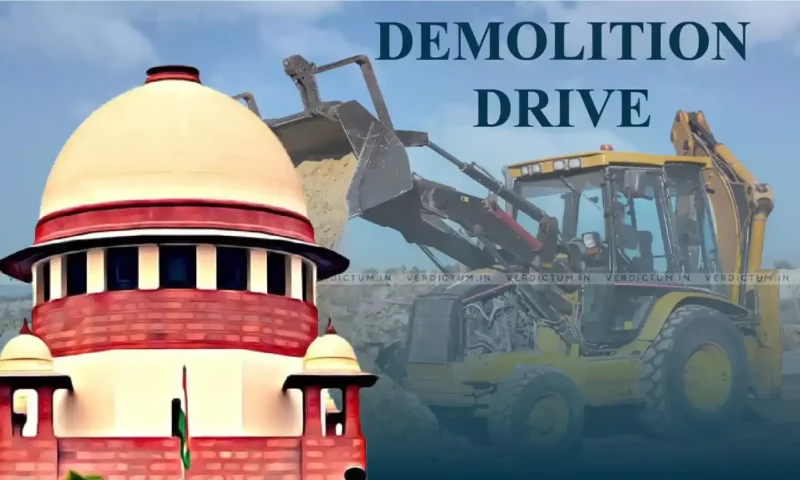
The Supreme Court has clarified that directions issued for removing encroachments from highways cannot be interpreted as blanket authority to demolish structures without following the legally prescribed procedure. The clarification reinforces the principle that infrastructure development and road-safety enforcement must operate within constitutional safeguards and established legal frameworks.
The Court’s observation makes it clear that administrative authorities cannot use highway encroachment-removal directions as an independent justification for demolishing buildings or other structures without ensuring due process. Any demolition action must comply with applicable legal requirements including proper identification of encroachment, procedural safeguards and opportunities available to affected parties under the law.
The clarification is significant for state governments, municipal bodies, development authorities and highway administrations responsible for maintaining road corridors and removing unauthorised occupation of public land. While authorities have a legitimate responsibility to protect highway land, maintain road safety and prevent obstruction, enforcement cannot bypass statutory obligations.
The development also highlights the distinction between genuine highway encroachment and structures that may require independent legal examination before coercive action. Administrative convenience cannot replace legal compliance, particularly when demolition directly affects property rights and livelihoods.
Governance Impact: The clarification strengthens accountability in public infrastructure administration by establishing that road-clearance operations must remain transparent, legally justified and procedurally fair. It also places greater responsibility on implementing agencies to verify land records, establish the legal status of structures and document compliance before taking demolition measures.
The ruling reinforces a broader governance principle: infrastructure expansion and public safety must be balanced with the rule of law, protection of citizens’ rights and accountable administrative decision-making.
The order was passed on November 18, 2026 by a Bench of Justice Vikram Nath and Justice Aparesh Kumar Singh in the suo motu proceedings arising from the Phalodi road accident case. The Court clarified that its April 13, 2026 directions for removing unauthorised highway encroachments had not determined the legality of individual properties.
The Bench also allowed affected property owners to approach their respective High Courts. Interim protection against demolition will continue for the disputed structures covered by the applications until the High Courts decide the proceedings. This protection does not authorise fresh construction or new encroachments.