
PM Surya Ghar Scheme Accelerates Rooftop Solar Expansion: Targets 1 Lakh Installations Every 4–5 Days
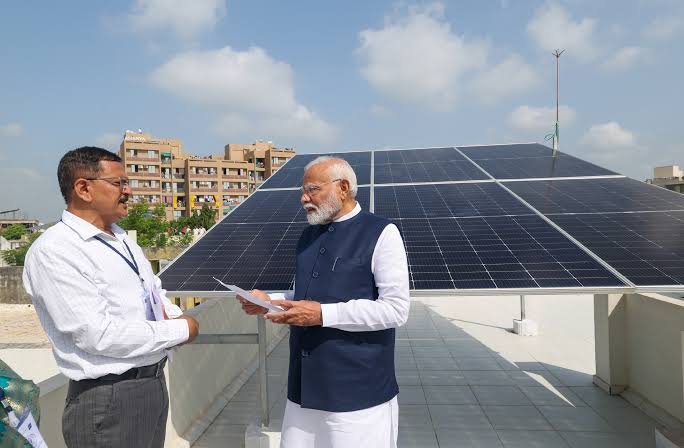
The Centre is accelerating India’s residential solar energy transition under the PM Surya Ghar: Muft Bijli Yojana with an ambitious target of installing one lakh rooftop solar systems every four to five days. Union Minister for New and Renewable Energy Pralhad Joshi announced the accelerated implementation target at the Bharat Renewable Energy Summit 2026 in New Delhi on November 4, highlighting the government’s efforts to expand decentralised power generation and reduce household dependence on conventional electricity.
The government is currently achieving approximately one lakh rooftop solar installations every six days and aims to further improve this pace to every four to five days. According to Pralhad Joshi, streamlined procedures and improved implementation mechanisms have significantly reduced installation timelines, bringing the process down from 44 days to six days.
Launched in February 2024, the PM Surya Ghar scheme aims to provide rooftop solar systems to one crore households by March 2027. The programme has an approved financial outlay of ₹75,021 crore and provides eligible households with central financial assistance of up to ₹78,000 for rooftop solar installations of 3 kW or above.
The Minister highlighted that approximately 65 lakh households have been covered under the programme with 21 lakh households receiving zero electricity bills. Additionally, beneficiaries generating surplus electricity are selling it to distribution companies with approximately ₹700 crore reimbursed for excess power supplied to the electricity grid.
Governance & Economic Impact
The accelerated rollout represents a significant shift towards decentralised electricity generation, enabling households to become both energy consumers and producers. The initiative is expected to reduce household electricity expenditure, strengthen energy security, encourage domestic solar infrastructure manufacturing and create employment opportunities across installation, maintenance and related services.
Achieving the one-crore household target will also strengthen India’s clean energy transition while reducing pressure on conventional power distribution networks. The programme’s success will depend on efficient state-level implementation, DISCOM coordination, vendor availability and timely subsidy disbursement.