
ECI Defends SIR Process Before Supreme Court, Says All Decisions Were Unanimous and Form 6 Remains Unchanged
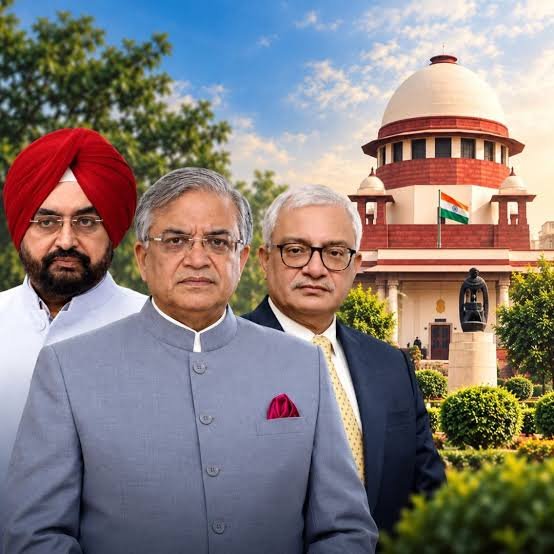
The Election Commission of India (ECI) has defended its decision-making process for the Special Intensive Revision of electoral rolls before the Supreme Court, asserting that all three major orders concerning the exercise were unanimously approved by the Commission’s three members. The poll body has also denied allegations that Form 6, used for voter registration was amended during the revision process.
In a counter-affidavit filed in response to petitions challenging the functioning of Chief Election Commissioner Gyanesh Kumar and the legality of certain Commission decisions, the ECI maintained that the SIR orders issued on June 24, 2025 October 27, 2025 and May 14, 2026 were approved unanimously by the CEC and the two Election Commissioners, Sukhbir Singh Sandhu and Vivek Joshi.
Form 6 Dispute and Legal Clarification
The Commission clarified that Form 6 prescribed under the Registration of Electors Rules, 1960 was not amended. It argued that the declaration introduced for SIR is a separate document intended to help applicants establish links with earlier electoral rolls. The ECI acknowledged that the online application interface could create the impression that Form 6 had been modified and said the two components would be displayed separately.
The Commission further stated that internal notes, queries and suggestions recorded during file processing do not by themselves, constitute formal decisions. It maintained that its decision-making process complies with Section 18 of the Chief Election Commissioner and Other Election Commissioners Act, 2023 which provides for unanimity as far as practicable and majority decisions where unanimity is not achieved.
Voter Access and Administrative Safeguards
The ECI said voters whose details cannot be mapped to earlier electoral rolls would ordinarily not need to attend hearings personally. Booth Level Officers would collect relevant documents for submission to Electoral Registration Officers. It also clarified that additions to or deletions from electoral rolls on the ECINet platform require an order from the competent Electoral Registration Officer.
Governance Impact
The dispute places electoral transparency, institutional accountability and voter-registration safeguards at the centre of the legal debate. The Supreme Court’s scrutiny will be significant in examining the statutory authority of the Election Commission, the procedures governing electoral-roll revision and the protection of eligible voters’ enrolment rights. The ECI’s affidavit represents its defence; the disputed allegations remain subject to judicial consideration.