
Physics Nobel 2026: Francis Halzen Honoured for IceCube Breakthrough in High-Energy Cosmic Neutrinos
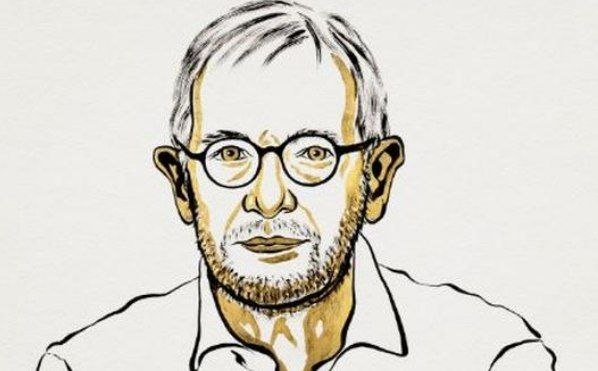
Belgian-American physicist Francis Halzen has been awarded the 2026 Nobel Prize in Physics for his decisive contributions to the IceCube Neutrino Observatory and the discovery of high-energy neutrinos originating from astrophysical sources. The Royal Swedish Academy of Sciences announced the award on October 6, 2026.
Halzen’s work helped transform neutrino research into a powerful method for studying the most energetic phenomena in the universe. The IceCube Observatory, embedded deep beneath the Antarctic ice at the South Pole, uses a vast volume of transparent ice and light sensors to detect signals produced when elusive neutrinos interact with matter. The observatory has enabled scientists to identify high-energy neutrinos travelling across cosmic distances and investigate their astrophysical origins.
The breakthrough is significant because neutrinos interact only weakly with matter and can travel through space with comparatively little disturbance. This makes them valuable cosmic messengers, capable of providing information that conventional astronomical observations may not reveal. IceCube’s research is now contributing to the emerging field of multimessenger astronomy where neutrino observations are combined with electromagnetic and gravitational-wave data to study extreme cosmic events.
Governance & Scientific Impact
The Nobel recognition underscores the importance of sustained investment in large-scale scientific infrastructure, international collaboration and frontier research. IceCube’s expanding datasets and upgraded detection capabilities are broadening research into neutrino physics, cosmic-ray sources and the structure of the universe. The observatory is also being explored for applications in studying Earth’s interior through neutrino interactions.