₹1.86 Lakh Crore Green Energy Corridor-III Gets Cabinet Nod, Targeting 135 GW Renewable Power Evacuation
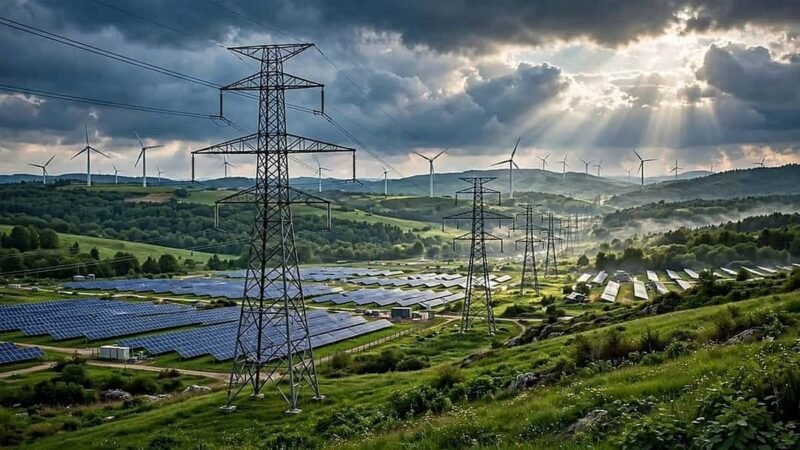
The Union Cabinet has approved the Green Energy Corridor Phase-III (GEC-III) scheme with a total outlay of ₹1,86,405 crore, marking a major expansion of India’s intra-state transmission infrastructure to support the rapid growth of renewable energy.
The scheme is designed to enable the evacuation of up to 135 GW of renewable energy across States and Union Territories by FY 2032-33. At its core, GEC-III seeks to address a critical infrastructure challenge: renewable generation can expand rapidly only when transmission capacity is built ahead of new projects.
Of the total allocation ₹1,36,378 crore will be deployed for strengthening Intra-State Transmission Systems, while ₹50,000 crore has been earmarked for 50 GWh of Battery Energy Storage Systems (BESS). The Centre will provide ₹54,082 crore in Central Financial Support, helping offset transmission charges and contain the impact on electricity costs.
The battery-storage component adds a crucial grid-flexibility layer. It is intended to manage renewable-energy intermittency, transmission congestion, peak-hour curtailment and demand during non-solar hours. This is particularly significant as India integrates larger volumes of variable solar and wind generation into the power system.
The infrastructure push is also expected to create demand across power equipment manufacturing, construction, energy storage, grid management and operations and maintenance. Greenfield transmission projects will be implemented through tariff-based competitive bidding, while brownfield strengthening will follow a cost-plus model.
Governance Impact
GEC-III shifts the renewable-energy expansion agenda beyond generation capacity towards grid readiness, transmission planning and storage integration. By strengthening state-level networks and adding large-scale storage ,the scheme is designed to improve the ability of the power system to absorb renewable electricity while supporting India’s longer-term target of 900 GW of installed non-fossil capacity by 2035.