Ethanol Blending: Balancing Economic Gains with Policy Challenges
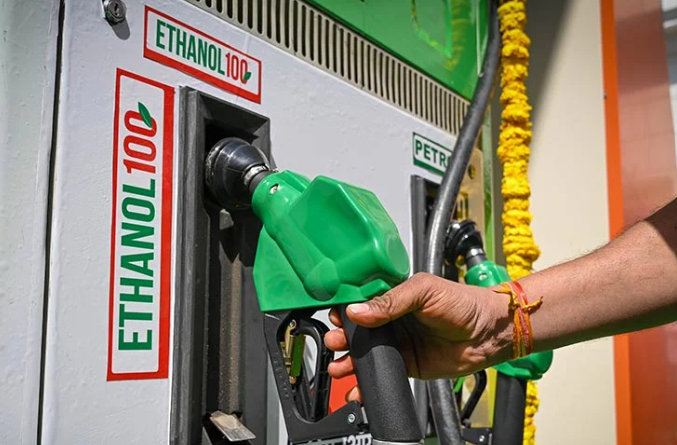
India’s ethanol blending programme has emerged as an important component of the country’s energy-security and economic strategy. The policy seeks to reduce dependence on imported crude oil, conserve foreign exchange, strengthen domestic agriculture and promote cleaner mobility.
The economic benefits of ethanol blending are significant. According to the Government, the programme has helped substitute substantial volumes of crude oil imports and generate foreign-exchange savings. It has also created a growing market for agricultural feedstocks such as sugarcane and maize thereby supporting farmer incomes and strengthening rural economic activity.
India achieved the 20% ethanol-blending milestone in 2025-26, considerably ahead of the earlier target. Ethanol production capacity has expanded substantially alongside rising procurement, indicating the development of a domestic biofuel ecosystem.
However, the transition to E20 has also generated a wider policy debate. Concerns have been raised regarding fuel efficiency, compatibility of older vehicles and the need to ensure consumer interests during the transition. Recent public discussion, including the suggestion of making lower-ethanol blends available for some older vehicles, highlights the importance of balancing energy objectives with consumer choice.
From a governance perspective, the key priority is to ensure that ethanol policy remains evidence-based, transparent and responsive to stakeholders. Continued consultation with automobile manufacturers, farmers, oil marketing companies, technical institutions and consumers can help address implementation challenges.
The broader policy objective should therefore remain a balanced energy transition—one that combines energy security, farmer welfare, economic resilience, environmental sustainability and consumer protection. Ethanol blending can deliver substantial economic benefits, but its long-term success will depend on calibrated implementation and continuous policy assessment.