Parliament’s Monsoon Session Records Low Productivity Despite Passage of 11 Bills
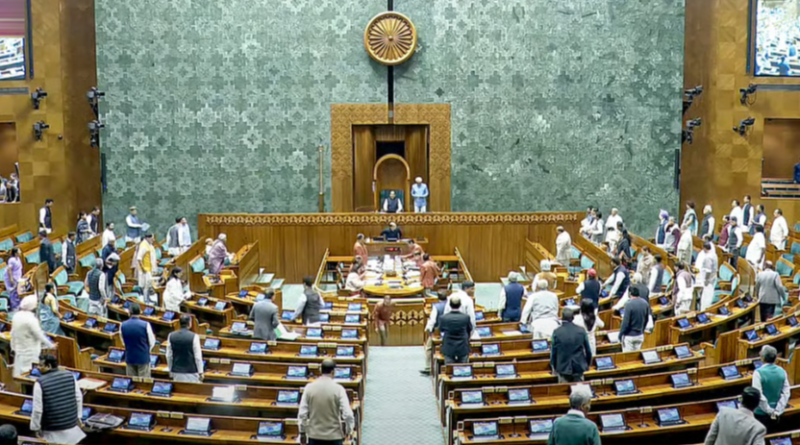
The Monsoon Session of Parliament 2026 concluded on August 13 after 19 sittings of both the Lok Sabha and Rajya Sabha. The session witnessed significant disruptions, resulting in substantially lower legislative productivity. According to PRS Legislative Research, the Lok Sabha functioned for around 15% of its scheduled time, while the Rajya Sabha functioned for 33%.
Despite the limited functioning of the Houses, Parliament maintained legislative activity during the session. A total of 12 Bills were introduced, while 11 Bills were passed, excluding an Appropriation Bill.
The legislative business included measures relating to public examinations, national honour, tribunals, cooperative development, banking evidence, mining and minerals, the judiciary, MSMEs, taxation and registration of births and deaths. The Public Examinations (Prevention of Unfair Means) Amendment Bill, 2026 received the most detailed parliamentary discussion, with 48 MPs participating in the Lok Sabha and 35 in the Rajya Sabha.
However, the low level of debate remained a key feature of the session. PRS data shows that nine of the 11 Bills passed by the Lok Sabha were cleared without any MP other than the concerned Minister speaking on them. This raised concerns about the extent of legislative scrutiny and deliberation.
The disruption also affected Question Hour, an important mechanism for executive accountability. It functioned for only 1% of its scheduled time in the Lok Sabha and 12% in the Rajya Sabha.
The session therefore presents a mixed governance picture: legislative output remained substantial, but parliamentary functioning and deliberative scrutiny were significantly constrained. The data highlights the importance of ensuring adequate time for debate, committee scrutiny and parliamentary accountability alongside the passage of legislation.