Tree Plantation Campaign Strengthens Community-Led Environmental Governance
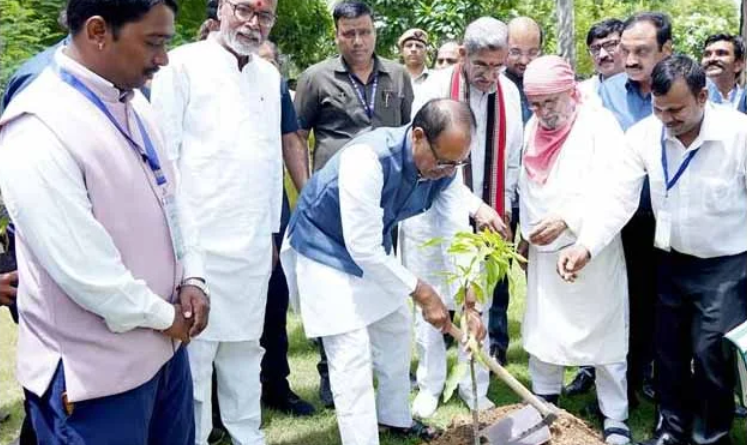
On the occasion of Hariyali Amavasya, a nationwide tree plantation campaign led by Union Minister for Agriculture and Farmers’ Welfare and Rural Development Shivraj Singh Chouhan was undertaken through the Vriksh Mitra Parivar. More than 50,000 saplings were planted across 31 states, giving further momentum to Prime Minister Narendra Modi’s “Ek Ped Maa Ke Naam” initiative.
The principal programme was organised at PBG Ground, Central Range, near Talkatora Stadium in Delhi, where ministers, Members of Parliament, government officials, farmers, students, youth and citizens participated in collective plantation activities. Similar activities were carried out in villages, towns, panchayats and institutions across the country.
The initiative reflects a people-centric approach to environmental governance, with emphasis not only on increasing green cover but also on ensuring long-term community participation in the protection and maintenance of planted trees. The Vriksh Mitra Parivar played an important role in mobilising citizens and encouraging individuals to plant at least one tree and involve others in the campaign.
Addressing the gathering, Shivraj Singh Chouhan emphasised that tree plantation should be viewed as an investment in the environmental security of future generations. He highlighted the close relationship between ecological sustainability, agriculture, water availability, soil health and public well-being. He also stressed that planting trees must be accompanied by a sustained commitment to their protection and upkeep.
The minister called for integrating tree plantation with important social occasions and encouraged citizens to observe such occasions as opportunities for creating and nurturing green assets. He also urged panchayats, urban local bodies and institutions to earmark suitable spaces for plantation and establish mechanisms for regular monitoring and maintenance of saplings.
The campaign also reinforces the environment-agriculture linkage. Environmental degradation directly affects water resources, soil quality and agricultural productivity. Promoting Mission LiFE, resource conservation, energy efficiency and reduction of plastic use can therefore contribute to stronger climate resilience and sustainable rural development.
Delhi Minister Manjinder Singh Sirsa highlighted the campaign’s growing citizen participation in the national capital, including efforts to involve schools, colleges and institutions. Delhi Minister Pravesh Verma underlined the need to balance infrastructure and economic development with environmental protection, emphasising that sustainable development requires both growth and ecological responsibility.
The participation of representatives from agricultural universities, ICAR, DARE, Krishi Vigyan Kendras, institutions and the Vriksh Mitra Parivar further strengthened the institutional dimension of the initiative.
Overall, the campaign represents a community-driven model of environmental governance, combining public participation, institutional coordination and ecological responsibility. Its key policy message is that the success of plantation programmes should be measured not merely by the number of saplings planted, but by their survival, protection and long-term contribution to green and climate-resilient development.
Key Governance Takeaways
50,000+ saplings planted across 31 states
Strengthening of community-led environmental governance
Greater convergence between agriculture, water, soil and environmental sustainability
Participation of panchayats, urban bodies, educational institutions and citizens
Focus on post-plantation care and survival of saplings
Promotion of Mission LiFE and resource-efficient lifestyles
Alignment with the national “Ek Ped Maa Ke Naam” campaign
Emphasis on sustainable and climate-resilient development