Residential Rooftop Solar Capacity Nears 20 GW as Uttar Pradesh Leads India’s Clean Energy Expansion
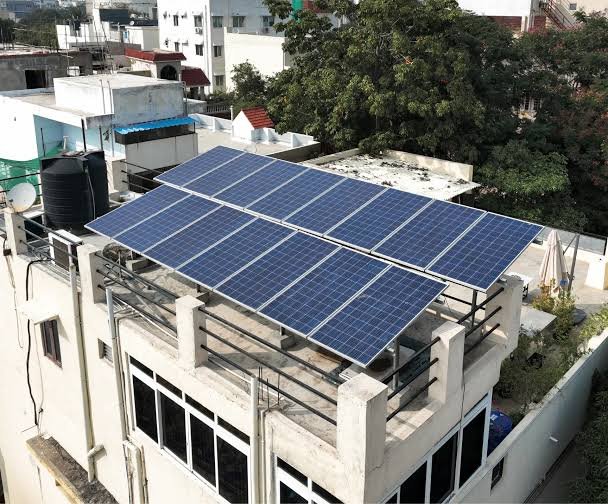
India’s residential rooftop solar programme is approaching a major capacity milestone with installations reaching 19,189 MW across 65.26 lakh households under the PM Surya Ghar: Muft Bijli Yojana . Uttar Pradesh, Maharashtra and Gujarat have emerged as the leading states, reflecting the growing adoption of decentralised renewable energy and the government’s push to expand household-level solar generation.
According to the reported data, India’s residential rooftop solar capacity increased from approximately 1,375 MW in September 2024 to 19,189 MW, highlighting the accelerating pace of implementation. Uttar Pradesh recorded the highest installation capacity, followed by Maharashtra and Gujarat, strengthening their position in the country’s distributed clean-energy transition.
Installation Momentum and Beneficiary Expansion
During October 2026, more than 1.2 lakh applications were received nationwide while 84,140 rooftop solar units were installed. On a cumulative basis, the programme received approximately 89.43 lakh applications, with installations covering more than 65 lakh households. The government has disbursed subsidies worth approximately ₹36,957 crore, supporting household investment in rooftop solar systems.
Economic and Policy Implications
The expansion is also improving the economics of household electricity consumption by reducing dependence on grid-supplied power and providing long-term savings. States with higher electricity tariffs such as Maharashtra and Kerala are witnessing relatively faster adoption because households can recover their investments more quickly. In contrast, lower tariffs in states such as Uttar Pradesh, Gujarat and Tamil Nadu can result in longer payback periods.
Governance Impact
The programme represents a shift towards consumer-driven energy generation with households becoming active participants in India’s clean-energy transition. For Uttar Pradesh, its strong installation performance creates opportunities to reduce household electricity expenditure, strengthen distributed power generation and support the state’s renewable-energy objectives.
The next phase will depend on faster application processing, timely subsidy disbursement, improved installation infrastructure and greater awareness among households. Sustaining this momentum will be critical to achieving India’s rooftop solar ambitions while strengthening energy security and reducing the long-term burden on conventional power infrastructure.